Buying directly from China means purchasing from a Chinese manufacturer, trading company, platform supplier, wholesale source, or factory contact without relying only on a local distributor.
Direct buying can reduce product cost or give more supplier control, but it also creates risks around payment, product specifications, Incoterms, shipping responsibility, customs documents, duty/tax planning, and final delivery.
If you are comparing direct suppliers on platforms, start with the practical basics in buy from Alibaba without turning the purchase into only a platform decision. Once goods are produced, you still need to plan shipping from China to USA, customs documents, landed cost, and final delivery before cargo leaves China.
Quick Answer: How Do You Buy Directly from China?
| Step | What to check | Importer note |
|---|---|---|
| 1. Choose supplier type | Manufacturer, trading company, platform supplier, sourcing agent | Each has different control and risk. |
| 2. Confirm product details | Material, specs, sample, packaging, labels, MOQ | Put key terms in writing. |
| 3. Check payment terms | Deposit, balance, platform protection, bank details | Avoid unclear or rushed payments. |
| 4. Confirm trade terms | EXW, FOB, CIF, DDP, door-to-door | Supplier price is not always landed cost. |
| 5. Prepare shipping data | Cartons, dimensions, weight, cargo ready date, destination | Needed for freight quote accuracy. |
| 6. Plan customs and delivery | Invoice, packing list, HS code, IOR, final address | Check before shipment. |
What Does Buying Directly from China Mean?
Buying directly from China can mean buying from a manufacturer, trading company, wholesale supplier, platform supplier, trade show contact, supplier website, or an existing factory contact. It does not automatically mean you are buying from the actual factory.
Some suppliers are manufacturers, some are trading companies, and some combine production, sourcing, and export support. Buying direct may reduce layers, but it also increases the importer’s responsibility for checking product details, payment terms, shipping scope, and customs documents.
Where Can Importers Buy Directly from China?
Common channels include B2B platforms, China wholesale websites, trade fairs such as the Canton Fair, supplier websites, referrals from sourcing agents, and direct factory contacts. Keep this step focused on finding a suitable supplier, not collecting dozens of platforms.
For platform and supplier-channel comparison, see China wholesale websites. After a supplier is selected, the more important question becomes whether the order details, payment terms, shipping responsibility, and customs documents are clear.
Manufacturer vs Trading Company vs Sourcing Agent
| Supplier type | Possible advantage | Importer should check |
|---|---|---|
| Manufacturer | Better production control or price potential | Factory capability, MOQ, QC process, export experience. |
| Trading company | More product variety and communication support | Actual supplier role, pricing, documents, accountability. |
| Sourcing agent | Helps find and manage suppliers | Fee structure, transparency, inspection support, shipping coordination. |
| Platform supplier | Easier discovery and payment tools | Order terms, supplier verification, communication records. |
No supplier type is always best. A manufacturer can be weak at export documents, while a trading company may communicate better but add another layer. Choose based on product complexity, volume, quality risk, and logistics readiness.
Supplier Terms Importers Should Confirm Before Paying
Before deposit or final payment, confirm product name, model, material, specifications, sample approval, MOQ, unit price, packaging, logo/private label requirements, carton dimensions, estimated gross weight, production lead time, cargo ready date, inspection timing, payment terms, refund/rework terms, Incoterms, and export documents the supplier can provide.
Everything important should be written in the purchase order, proforma invoice, chat record, or contract. Do not rely only on verbal promises or vague messages such as “same as sample” without measurable details.
Payment Risk When Buying Directly from China
Common payment methods may include platform payment, T/T bank transfer, deposit/balance structure, PayPal in some cases, or letter of credit for larger orders. The risk depends on payment method, supplier history, inspection timing, documentation, and written order terms.
Alibaba says its Trade Assurance service provides secure payment methods, escrow-style payment holding, and assistance for eligible order issues when the order is handled through Alibaba.com. That does not mean every off-platform order, bank transfer, supplier dispute, or product problem is automatically protected.
For higher-risk orders, inspection before balance payment can reduce risk, but it does not eliminate all supplier or product risk. Importers should also confirm bank account details carefully and avoid rushed payment changes.
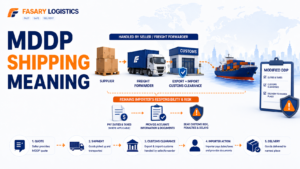
EXW, FOB, CIF, DDP: Why Supplier Terms Matter
Supplier price and landed cost are different. The same product price can lead to different total cost depending on Incoterms, pickup point, export handling, freight, customs, duty/tax responsibility, and final delivery.
| Term | What importers may think | What to confirm |
|---|---|---|
| EXW | Cheapest supplier price | Pickup, export handling, freight, customs, delivery. |
| FOB | Supplier handles origin port side | Port, cutoff, export documents, freight responsibility. |
| CIF | Freight included to destination port | Destination charges, customs, final delivery. |
| DDP | One coordinated quote | Duty/tax scope, exclusions, product restrictions. |
A DDP shipping from China to USA quote may be convenient, but DDP scope must be confirmed in writing. Do not assume it includes every duty, tax, exam, storage, remote delivery, or restricted-product cost.
Shipping and Customs Information to Prepare Before Production Finishes
Do not wait until the supplier says “goods are ready” before asking for a freight quote. Prepare the supplier pickup address, cargo ready date, product name and material, cargo value, HS code if available, carton count, carton dimensions, gross weight, photos if useful, sensitive cargo details, destination country, final ZIP/postal code, address type, and preferred method.
Address type matters because a business warehouse, Amazon FBA, 3PL, residential address, or limited-access delivery can change the quote. If goods involve batteries, liquids, powders, magnets, branded items, or regulated products, mention this before booking.
For quote preparation, use a clear shipping quote from China to USA process. For customs planning, check customs clearance from China to USA before cargo departs. CBP’s Tips for New Importers and Exporters also reminds new importers to understand their responsibilities before importing.
Should You Use the Supplier’s Shipping or Your Own Freight Forwarder?
Supplier shipping may work for small samples or simple parcel shipments. For commercial cargo, multi-supplier orders, Amazon FBA, DDP, or warehouse delivery, importers should compare written scope before choosing.
| Option | When it may work | What importers should check |
|---|---|---|
| Supplier shipping | Small sample or simple parcel | Tracking, declared value, delivery scope, customs responsibility. |
| Supplier FOB/CIF quote | Ocean shipment arranged partly by supplier | Destination charges, customs, final delivery. |
| Freight forwarder quote | Commercial cargo, FBA, DDP, multi-supplier orders | Pickup, freight, customs-related info, final delivery scope. |
| Split plan | Urgent samples by air, bulk by sea | Cost, urgency, inventory timing. |
A supplier quote may not include destination charges, customs broker fees, duty/tax, warehouse delivery, Amazon appointment, residential delivery, liftgate, or storage. Compare the same service scope, not only the lowest number.
Compare Supplier Shipping?
Send your supplier quote, pickup city, cargo ready date, carton data, product details, destination, and delivery requirements before choosing a shipping option.
*Fast response. No obligation.
Common Mistakes When Buying Directly from China
| Mistake | Why it causes problems | Better approach |
|---|---|---|
| Paying deposit before specs are clear | Product disputes become harder | Confirm specs and sample terms first. |
| Assuming “factory direct” means manufacturer | Supplier role may be unclear | Ask about factory, export role, and documents. |
| Choosing only the lowest unit price | Freight and quality risk may increase | Compare landed cost and risk. |
| Ignoring carton data until goods are ready | Freight quote may be inaccurate | Get dimensions and weight early. |
| Accepting vague shipping terms | Cost responsibility becomes unclear | Confirm EXW, FOB, CIF, DDP, or door-to-door. |
| Assuming DDP includes everything | Scope varies by provider | Check exclusions in writing. |
| Not checking sensitive cargo | Carrier or customs issues may occur | Review product type before payment. |
| No inspection before balance when needed | Quality issues may be found too late | Plan inspection timing. |
| Asking for a freight quote without data | Quote may be unreliable | Provide cargo and destination details. |
What Fasary Can Help With After You Choose a Supplier
Fasary can help importers collect cargo details from suppliers, coordinate supplier pickup in China, receive or consolidate goods in a China warehouse where applicable, compare express, air, sea, DDP, and split-shipment options, clarify whether supplier terms are EXW, FOB, CIF, or DDP, organize customs-related shipment information, prepare clearer freight quote scope, and coordinate final delivery to the U.S. or Canada.
Fasary’s value is not replacing supplier due diligence or payment protection. The practical value is helping importers connect supplier information, cargo data, shipping method, quote scope, customs preparation, and final delivery before goods leave China.
Ready After Choosing Supplier?
We can help organize supplier cargo details, pickup, consolidation, freight quote scope, customs-related information, and final delivery planning.
*Fast response. No obligation.
FAQ
How do I buy directly from China?
Start by choosing a supplier type, confirming product specifications, checking payment terms, agreeing on Incoterms, and collecting cargo data before production finishes. Then plan freight, customs documents, landed cost, and final delivery before the goods leave China.
Can I buy directly from China manufacturers?
Yes, but “direct” should be verified. Some suppliers are real manufacturers, while others are trading companies or platform sellers. Ask about factory capability, MOQ, export experience, quality control, and documents before placing a bulk order.
Is buying directly from China cheaper?
It can be cheaper, but not always. A lower unit price may be offset by quality issues, higher freight cost, unclear Incoterms, duty/tax responsibility, destination charges, or poor delivery planning. Compare landed cost, not only supplier price.
Is it safe to buy directly from China suppliers?
It depends on supplier quality, payment method, written terms, inspection plan, product risk, and communication. Use clear specifications, verified payment channels where possible, inspection before final balance when needed, and written confirmation for key order terms.
Should I use supplier shipping or my own freight forwarder?
Supplier shipping may work for simple samples, but commercial cargo often needs clearer quote scope. A freight forwarder can help compare pickup, freight, customs-related information, DDP, warehouse delivery, Amazon FBA, and final delivery requirements.
What shipping information do I need after buying from China?
Prepare pickup address, cargo ready date, product name, material, value, HS code if available, carton count, dimensions, gross weight, final ZIP/postal code, address type, and preferred shipping method before requesting a quote.
Conclusion
Buying directly from China can work well when supplier terms, product details, payment method, shipping scope, customs documents, and final delivery are checked before shipment.
Before final payment or booking, confirm product specs, payment terms, Incoterms, cargo data, restricted goods risk, freight quote scope, and landed cost. Fasary can help coordinate pickup, consolidation, freight quote, customs-related shipment information, and final delivery after the supplier is selected.