Cargo insurance protects the commercial value of goods if cargo is lost or damaged during transit, subject to policy terms and insurer approval.
Carrier liability is often limited and may not match the invoice value of the cargo. Importers should decide whether to insure based on cargo value, risk tolerance, shipping method, route, and shipment type. Cargo insurance is relevant for long-distance freight such as shipping from China to USA, shipping from Vietnam to US, and shipping from China to Canada.
Quick Decision: Do You Need Cargo Insurance?
| Shipment type | Insurance priority | Why |
|---|---|---|
| High-value electronics | High | Theft, damage, and liability gaps can be large. |
| Ocean freight consumer goods | Strongly recommended | Long transit and multiple handling points create risk. |
| Air freight parcels with high invoice value | High | Fast movement does not remove damage or theft risk. |
| CIF purchases from suppliers | Review carefully | Supplier-arranged insurance may be narrower than expected. |
| Low-value industrial cargo | Case by case | Premium may be low, but risk tolerance matters. |
Need Cargo Insurance?
Send your cargo value, product type, shipping method, route, packaging details, and quote scope. We’ll help check whether insurance should be quoted for your shipment.
*Fast response. No obligation.
What Is Cargo Insurance?
Cargo insurance protects the cargo owner’s financial interest in the goods during international transit. It may cover physical loss or damage during ocean, air, truck, rail, warehouse, or multimodal movement, depending on the policy wording.
Carrier liability is different. A carrier or forwarder may have liability limits, defenses, and proof requirements. Cargo insurance insures the goods themselves, but payment still depends on coverage level, exclusions, documents, packaging, and claim review.
Why Carrier Liability Is Not Enough
Carrier liability may be limited by contract, law, convention, weight, package unit, declared value, or proof of carrier fault. It may not equal the commercial invoice value.
Cargo insurance may help because the claim is reviewed under the insurance policy rather than only under carrier liability rules.
| Risk situation | Carrier liability issue | Why insurance may help |
|---|---|---|
| Ocean freight damage or loss | Liability may be limited by package, contract, or legal rules. | Insurance may respond to insured physical loss or damage. |
| Air freight damage or loss | Liability may be weight-based and below invoice value. | Coverage may reflect the insured value instead. |
| Theft / pilferage | Carrier fault may be difficult to prove. | Broader policies may cover theft, subject to terms. |
| Weather or accident damage | Carrier may deny or limit liability depending on cause. | Insurance may cover covered perils or broader physical damage. |
How Much Does Cargo Insurance Cost?
Cargo insurance cost is usually calculated as a percentage of the insured value. The rate depends on commodity, cargo value, route, shipping method, packaging, loss risk, and coverage level.
Actual premium should be confirmed with the insurer or forwarder because rates vary by commodity, route, value, packaging, and policy terms.
| Cost factor | Why it matters |
|---|---|
| Ocean freight | Longer transit and more handling points may affect risk. |
| Air freight | Faster transit may reduce time risk, but handling risk remains. |
| High-value or theft-prone goods | Electronics, branded goods, and small high-value cargo may cost more to insure. |
| Fragile or damage-prone goods | Packaging quality and breakage risk affect acceptance and premium. |
110% Cargo Insurance Calculation
Insured value is often calculated as:
(Commercial invoice value + freight cost + other agreed costs) × 110%
The extra 10% is commonly used to help cover related costs beyond the factory invoice value. The exact insured value should be confirmed based on the policy, Incoterm, freight quote, and shipment terms.
What Cargo Insurance Usually Covers
Cargo insurance usually focuses on physical loss or damage to goods, not every cost connected with delay or delivery problems.
| Risk | Usually covered under broader policies? | What to confirm |
|---|---|---|
| Physical loss | May be covered | Insured value and covered transit points |
| Partial damage | May be covered | Survey, repair, replacement, and deductible rules |
| Theft / pilferage | May be covered | Theft exclusions and evidence requirements |
| Fire / accident | Often covered | Mode and location of incident |
| Water damage / weather-related damage | May be covered | Packaging and exclusion wording |
| General Average contribution | May be covered | Whether guarantee and contribution are included |
Cargo insurance usually protects physical loss or damage, not every delay-related cost. Demurrage, detention, storage, customs exams, and special delivery charges may be excluded unless specifically covered.
Institute Cargo Clauses: ICC (A), ICC (B), and ICC (C)
| Clause | General coverage level | Practical note |
|---|---|---|
| ICC (A) | Broadest of the common clauses | Often preferred for higher-value commercial goods, subject to exclusions. |
| ICC (B) | Medium-level named-perils coverage | Narrower than ICC (A). |
| ICC (C) | Narrower named-perils coverage | May not cover many partial damage or theft scenarios. |
If cargo is purchased under CIF, review the actual insurance certificate and clause level instead of assuming full coverage.
Common Exclusions to Check
| Exclusion | Why it matters |
|---|---|
| Poor or insufficient packaging | Weak factory packing may be excluded. |
| Inherent vice | Natural deterioration or product defect may not be covered. |
| Delay / loss of market | Lost sales from late arrival are usually not physical damage. |
| War / strikes unless endorsed | These risks may require special extensions. |
| Inaccurate documentation | Claim handling may be affected if shipment data is wrong. |
General Average
General Average can require cargo owners to share maritime loss or salvage costs when action is taken to protect the vessel and voyage.
- Even if your container is not damaged, cargo may be held until a guarantee is provided.
- Cargo insurance may help provide the guarantee or cover the contribution, subject to policy terms.
- Ocean freight importers should confirm whether General Average is included.
Insurance Responsibility Under Incoterms
| Incoterm / scope | Who often arranges insurance? | Importer caution |
|---|---|---|
| EXW | Buyer often arranges | Buyer controls coverage but must arrange it early. |
| FOB | Buyer often arranges | Buyer usually has more control over coverage selection. |
| CIF | Seller arranges minimum required insurance | Review the certificate and clause level carefully. |
| DAP / DDP-style | Varies by agreement | Confirm whether insurance is included, optional, or excluded in writing. |
CIF and CIP do not always provide the same insurance level under Incoterms. Importers should review the actual certificate and policy terms rather than relying only on the Incoterm name.
Route, Method, and Packaging Risk
Risk can vary by route, transshipment, inland rail or truck movement, port congestion, commodity type, and packaging. Long routes from China or Vietnam to the USA or Canada should be reviewed based on the full door-to-door movement, not only the ocean or air segment.
What to Do If Cargo Is Damaged or Lost
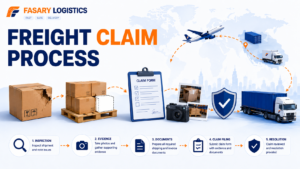
- Inspect and note damage on the delivery receipt. Do not sign clean if damage is visible.
- Take photos and videos before moving or unpacking cargo. Record cartons, pallets, seals, container condition, and damaged goods.
- Notify the carrier, forwarder, and insurer in writing quickly. Keep emails and claim references.
- Keep damaged cargo and packaging available for inspection. Do not discard evidence before claim review.
- Submit documents. Prepare invoice, packing list, B/L or AWB, photos, survey report if any, and claimed amount.
What Information Is Needed to Request Cargo Insurance?
| Information needed | Why it matters |
|---|---|
| Commercial invoice value | Basis for insured value. |
| Product name and material | Helps insurer assess commodity risk. |
| Shipping method | Ocean, air, truck, rail, or multimodal risk differs. |
| Origin and destination | Route and inland movement affect risk. |
| Packaging method | Weak packaging may affect coverage. |
| Incoterm or quote scope | Clarifies who should arrange insurance. |
| Requested coverage level | Helps compare ICC clauses or other terms. |
Get Insurance Reviewed
Share your invoice value, product material, origin, destination, shipping method, Incoterm, packaging method, and requested coverage level before booking.
*Fast response. No obligation.
FAQ
Do I really need cargo insurance if the carrier has liability coverage?
Usually yes for valuable shipments. Carrier liability may be limited by contract, law, weight, package unit, or proof of fault. Cargo insurance can protect the cargo owner more directly, subject to policy terms.
What does cargo insurance usually cover?
Cargo insurance usually covers physical loss or damage to goods during covered transit. Broader policies may cover theft, fire, accident damage, water damage, and General Average contribution, but coverage depends on the policy wording.
What is not usually covered by cargo insurance?
Common exclusions may include poor packaging, inherent product defects, delay, loss of market, war or strikes without endorsement, and inaccurate shipment information. Importers should review exclusions before assuming coverage is broad.
How much does cargo insurance cost?
Cargo insurance cost is usually a percentage of insured value. Premium varies by commodity, route, shipping method, packaging, declared value, and coverage level. Confirm the actual rate before shipment.
Who should arrange cargo insurance under FOB?
Under FOB, the buyer often arranges insurance because the buyer controls the main freight risk after the FOB point. This gives the importer more control over coverage level and insurer selection.
Is factory-arranged CIF insurance enough?
Not always. CIF insurance may be narrower than the importer expects. Review the insurance certificate, insured value, clause level, covered route, exclusions, and claim process before relying on supplier-arranged coverage.
Conclusion
Cargo insurance helps protect the commercial value of goods when carrier liability is limited. It is especially important for high-value, damage-prone, theft-prone, or long-distance international shipments.
Importers should confirm coverage level, insured value, exclusions, packaging responsibility, Incoterms, and claim process before shipment. The insurance decision should be based on cargo value, route, method, packaging, and risk tolerance.