Incoterms define who pays, who controls freight, who handles customs responsibilities, and where risk transfers from seller to buyer.
This article focuses only on EXW, FOB, CIF, DAP, and DDP for importers, not every Incoterm or legal detail. If you are comparing supplier terms for a real shipment, see shipping from China to USA for the broader freight, customs, and delivery process.
Quick Answer: Which Incoterm Should Importers Understand First?
| Incoterm | Best for | Buyer control level | Main watchout |
|---|---|---|---|
| EXW | Buyers with strong origin-side support | Very high | Buyer handles pickup and export-side logistics. |
| FOB | Importers wanting freight control after origin port | High | Buyer still handles main freight, customs, and delivery. |
| CIF | Buyers accepting supplier-arranged ocean freight to port | Medium | Destination charges and control may be unclear. |
| DAP | Buyers wanting delivery but customs responsibility | Medium-low | Buyer still pays import duties and taxes. |
| DDP | Buyers wanting bundled door-to-door service | Low | Scope, IOR setup, and exclusions must be checked. |
FOB gives more control. DAP gives delivery convenience with customs responsibility. DDP gives the most convenience, but the written scope must be checked carefully.
Not Sure Which Term Fits?
Send your supplier term, cargo details, destination, delivery address type, and quote scope. We’ll help compare EXW, FOB, CIF, DAP, and DDP practically.
*Fast response. No obligation.
What Are Incoterms?
Incoterms are international trade terms published by the International Chamber of Commerce. They define logistics responsibilities in a sale contract. For the official source, see the ICC’s Incoterms rules.
In practice, Incoterms help clarify pickup, export handling, main freight, destination charges, import customs, duties, taxes, insurance, delivery, and risk transfer. They do not replace a freight quote, customs broker, commercial invoice, or written service scope.
Incoterms Overview Matrix: Who Usually Handles Each Stage?
| Stage | EXW | FOB | CIF | DAP | DDP |
|---|---|---|---|---|---|
| Origin pickup | Buyer | Seller | Seller | Seller/provider | Seller/provider |
| Export customs | Buyer/agent | Seller | Seller | Seller/provider | Seller/provider |
| Main freight | Buyer | Buyer | Seller | Seller/provider | Seller/provider |
| Import customs | Buyer | Buyer | Buyer | Buyer | Seller/provider, if agreed |
| Duties and taxes | Buyer | Buyer | Buyer | Buyer | Seller/provider, if agreed |
| Final delivery | Buyer | Buyer | Buyer | Seller/provider | Seller/provider |
Real responsibility still depends on the supplier agreement, forwarder quote, customs setup, and destination requirements.
Origin Terms vs Destination Terms
Origin terms usually give buyers more freight control but more coordination work. Destination terms usually give buyers more delivery convenience but less routing visibility.
| Term group | Buyer usually gets | Buyer usually gives up |
|---|---|---|
| EXW, FOB, CIF | More control or cost visibility | More coordination responsibility |
| DAP, DDP | Easier delivery workflow | Less control over routing and cost layers |
The key question is: Do I want more freight control, or more delivery convenience?
Origin Incoterms: EXW, FOB, and CIF
EXW: Maximum Buyer Responsibility
EXW means Ex Works. The seller makes goods available at the factory or warehouse, and the buyer handles pickup, export-side coordination, main freight, import customs, duties, taxes, and delivery. EXW may work when the buyer has strong local logistics support. The main watchout is origin-side complexity.
FOB: Common Control-First Option
FOB means Free On Board. The seller usually handles origin delivery and export clearance up to the named port, while the buyer controls main freight, import customs, destination charges, and delivery. FOB works well when the importer wants to choose the forwarder. The watchout: FOB does not include destination delivery or duties.
CIF: Supplier Arranges Freight to Destination Port
CIF means Cost, Insurance, and Freight. The seller arranges ocean freight and minimum insurance to the destination port, but the buyer usually handles import customs, duties, destination charges, and final delivery. CIF may look simple, but “freight included” usually does not mean warehouse delivery.
Destination Incoterms: DAP and DDP
DAP: Delivered to Place, but Buyer Handles Import Duties
DAP means Delivered At Place. The seller or logistics provider delivers goods to a named place, but the buyer usually remains responsible for import customs clearance, duties, and taxes. DAP may work when buyers want delivery convenience but still keep customs control. The watchout: delivery is not duty-paid service.
DDP: Delivered Duty Paid
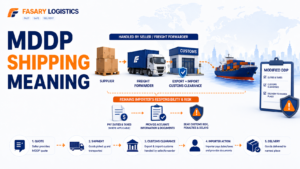
DDP means Delivered Duty Paid. The seller or provider usually handles more of the shipment, including delivery and duty/tax handling if clearly agreed. DDP may work for importers wanting a bundled door-to-door solution. The watchout: IOR setup, duty basis, customs responsibility, product assumptions, and exclusions must be confirmed in writing.
How to Choose the Right Incoterm as an Importer
| Buyer priority | Usually consider | Why |
|---|---|---|
| Maximum freight control | FOB | Buyer controls forwarder, routing, and destination side. |
| Supplier-side freight to port | CIF | Supplier arranges freight to port; buyer handles destination. |
| Delivery to address but buyer keeps customs responsibility | DAP | Delivery is arranged, but duties remain buyer’s responsibility. |
| Bundled door-to-door service | DDP | More steps may be handled under one written scope. |
| Strong origin-side control | EXW | Buyer manages pickup and export-side logistics. |
The right term depends on logistics capability, customs setup, supplier reliability, cargo type, and coordination tolerance.
Incoterms and Freight Control
| Incoterm | Buyer freight control | Practical meaning |
|---|---|---|
| EXW | Very high | Buyer controls almost everything after factory pickup. |
| FOB | High | Buyer controls main freight and destination side. |
| CIF | Medium-low | Supplier controls freight to destination port. |
| DAP | Low | Seller/provider controls delivery to named place. |
| DDP | Lowest | Seller/provider controls most logistics steps. |
Incoterms and Customs Responsibility
Under EXW, FOB, CIF, and DAP, the buyer usually remains responsible for import customs, duties, and taxes. The customs broker, Importer of Record, and duty payment arrangement should be confirmed before shipment.
Under DDP, the seller or provider usually handles more customs and duty-related work, but the IOR setup and product responsibility must be checked in writing.
Customs, Duties, and Landed Cost Visibility
Before accepting supplier terms, confirm:
- Importer of Record.
- Who pays duties and taxes.
- Who handles customs clearance.
- Whether destination charges are included.
- Whether final delivery is included.
- Whether special delivery requirements are covered.
For real quotation checks, see shipping quote from China to USA.
Incoterms and Delivery Scope
| Incoterm | Common misunderstanding | What to confirm |
|---|---|---|
| FOB | Destination delivery is included. | Freight, destination charges, delivery, and duties. |
| CIF | Port freight equals door delivery. | Destination charges, customs, and trucking. |
| DAP | Duties are included. | Duty, tax, and broker responsibility. |
| DDP | Everything is included. | IOR setup, exclusions, address limits, and special charges. |
| EXW | Origin work is simple. | Pickup, loading, export clearance, and documents. |
Common Mistakes Importers Make with Incoterms
| Mistake | What goes wrong | Better approach |
|---|---|---|
| Choosing the easiest-looking term | Hidden responsibilities appear later. | Check inclusions and exclusions. |
| Assuming CIF means door delivery | Buyer still pays destination costs. | Confirm destination scope. |
| Using EXW without local support | Pickup and export clearance become difficult. | Use EXW only with strong origin control. |
| Choosing DDP without checking IOR | Customs responsibility may be unclear. | Confirm IOR setup. |
| Comparing FOB and DDP only by price | Service scopes are different. | Compare responsibilities. |
| Ignoring customs duties | Import taxes may still be buyer’s responsibility. | Confirm who pays and files. |
| Relying only on verbal promises | Disputes happen after arrival. | Get scope in writing. |
Practical Incoterms Summary for Importers
- Choose EXW carefully if you can manage origin pickup.
- Choose FOB when you want freight control.
- Choose CIF carefully if the supplier arranges freight to port.
- Choose DAP when you want delivery but keep customs responsibility.
- Choose DDP when you want a bundled delivery solution, but only if scope is clear.
Want to Check Quote Scope?
Share your supplier quote and freight quote. We’ll help check who pays pickup, freight, customs, duties, destination charges, and final delivery.
*Fast response. No obligation.
FAQ
What are Incoterms?
Incoterms are trade terms that define seller and buyer responsibilities in a sale contract. They help clarify freight payment, transport control, customs responsibility, delivery scope, and risk transfer, but they do not replace a freight quote.
Which Incoterm is best for importers?
There is no single best term. FOB often works for buyers who want freight control. DAP works when buyers want delivery but keep customs responsibility. DDP can simplify execution if the written scope is clear.
Is FOB better than EXW?
FOB is often more practical for overseas buyers because the seller usually handles origin export clearance and port delivery. EXW gives more control but adds pickup, loading, and export-side responsibility.
Is CIF the same as door-to-door shipping?
No. CIF usually means the supplier arranges freight and insurance to the destination port. It normally excludes import customs, duties, destination charges, and final warehouse delivery.
Is DAP the same as DDP?
No. Under DAP, delivery to the named place may be arranged, but the buyer usually handles import duties and taxes. Under DDP, duties and taxes may be handled by the provider if agreed.
Why does DDP need careful checking?
DDP can be convenient, but the importer should confirm IOR setup, duty basis, customs responsibility, final delivery limits, product assumptions, and excluded charges. A DDP quote is reliable only when scope is written clearly.
Conclusion
Incoterms define control, cost responsibility, customs responsibility, delivery scope, and risk transfer. EXW gives the buyer the most responsibility, FOB gives strong freight control, and CIF can hide destination responsibilities.
DAP gives delivery convenience while the buyer still handles import duties. DDP gives the most convenience, but it requires careful written scope checking before booking.