Customs clearance from China to Canada is where most China-to-Canada shipments actually slow down — not on the vessel or the flight. CBSA releases cargo based on the quality of the information it receives: the commercial invoice, product description, HS code, declared value, importer setup, and whether duty and GST/HST responsibility is clear. A shipment that arrives on time can still sit unreleased because the invoice says “hardware,” the supplier’s HS code doesn’t survive CBSA review, or the GST/HST treatment was never confirmed. Below is what CBSA actually checks, the documents you need, how duty and GST/HST work, and how to lock the DDP vs non-DDP scope before the cargo leaves China.
Most customs delays are caused by document errors, vague product descriptions, missing broker setup, unclear duty/GST responsibility, or unclear DDP/non-DDP quote scope. The safest time to fix these issues is before the cargo leaves China, not after it arrives in Canada.
Quick Answer: What Usually Delays Customs Clearance from China to Canada?
| Issue | First thing to check | Why it matters |
|---|---|---|
| Shipment held by CBSA | Commercial invoice description, HS code, and product details | CBSA needs enough information to understand what the goods are. |
| Unexpected duty or GST bill | HS classification, declared value, and quote scope | Duty/GST may be separate unless DDP-style scope is clearly agreed. |
| Cargo arrived but not released | Broker filing status and missing documents | Arrival does not mean cargo is legally released. |
| DDP confusion | Who acts as importer and what the DDP quote includes | DDP does not remove the need for accurate documents. |
| Surprise storage fees | Whether clearance was prepared before arrival | Delayed release can create storage or warehouse charges. |
| Missing product documents | Permits, certificates, or compliance documents if applicable | Regulated goods may require more than invoice and packing list. |
Customs clearance is mainly about correct information before arrival. If the broker, forwarder, or importer does not have the right documents early, the shipment may wait even if the vessel or flight arrives on time.
The goal is to prepare documents, importer responsibility, duty/GST scope, and broker setup before the shipment reaches Canada. For a broader shipping overview, see shipping from China to Canada. This article focuses only on customs clearance preparation and release responsibility.
Need Canada Customs Help?
Send us your product details, invoice value, packing details, supplier city, Canadian destination, and DDP or non-DDP preference. We’ll help check what customs preparation points should be reviewed before shipping.
*Fast response. No obligation.
How Customs Clearance from China to Canada Works
Customs clearance is the legal release process that allows imported goods to enter Canada for sale, storage, or distribution. It happens alongside physical freight movement, but the cargo cannot move freely until release is granted.
A simple customs flow usually looks like this:
- Supplier prepares commercial documents. The supplier provides the commercial invoice, packing list, and product details.
- Broker or forwarder reviews key information. Invoice, packing list, HS code, declared value, importer details, and transport documents are checked.
- Customs entry is submitted to CBSA. The broker or authorized party submits the import data and supporting information.
- CBSA reviews the shipment. CBSA may release the cargo, request more information, or inspect the shipment.
- After release, cargo can move to final delivery if freight scope includes it. Delivery to the warehouse, 3PL, Amazon, or business address is separate from legal customs release.
Some shipments can be prepared before arrival if documents are ready. This may reduce waiting time, but release still depends on CBSA review, shipment status, and whether the information is accepted.
To import commercial goods into Canada, the importer needs a CRA Business Number and access to the CARM Client Portal, and many importers work through a licensed customs broker who files the entry on their behalf. The CBSA guide to importing commercial goods into Canada explains that importers should identify goods, determine origin, check permits or restrictions, and decide whether to use a licensed customs broker.
What CBSA Checks Before Release
CBSA does not only look at whether the freight arrived. It checks whether the import information is complete, accurate, and acceptable for release.
| CBSA check | What it means | What importers should prepare |
|---|---|---|
| Product description | What the goods actually are | Specific product name, material, function, and use |
| HS code | Product classification for duty and reporting | HS code if available, plus enough product details for review |
| Declared value | Value used for duty/GST assessment | Accurate commercial invoice value and currency |
| Country of origin | Where the goods were made | China origin shown consistently on documents if applicable |
| Importer information | Who is responsible for the import | Importer business details and broker setup if needed |
| Permits or regulated goods | Whether other rules apply | Certificates, permits, or product compliance documents if required |
CBSA expects the information to match the real goods. If the invoice says one thing, the packing list says another, and the cargo description is vague, the broker may need clarification before release.
One China-specific point: certain China-origin categories — notably electric vehicles, steel, and aluminum — have been subject to special Canadian surtax measures that have been introduced and modified over time. The treatment that applies to your shipment depends on the HS classification and the current federal measures, so confirm it before booking rather than assuming the standard rate. For how this lands on the duty side, see import duty from China to Canada.
Documents Needed for Canada Customs Clearance
Most China-to-Canada commercial imports need a clear document set before arrival. Some products require extra certificates or permits, but the basic customs file usually starts with the commercial invoice, packing list, and transport document.
| Document | What it shows | Common mistake |
|---|---|---|
| Commercial invoice | Seller, buyer, product description, quantity, unit value, total value, currency, and origin | Vague descriptions or under-declared values |
| Packing list | Carton count, weight, dimensions, pallet details, and packaging information | Carton count or weight does not match shipment details |
| Bill of lading / air waybill | Shipment transport record and consignee details | Incorrect consignee or shipment reference information |
| Supporting certificates or permits if required | Product compliance, safety, origin, sanitary, or regulated goods documents | Assuming every product only needs invoice and packing list |
| HS code / product details | Classification support for customs review | Using a supplier code without enough product detail |
A strong customs document should describe the product clearly.
Bad description: “hardware”
Better description: “stainless steel hex bolts, 5 mm”
This level of detail helps the broker and CBSA understand the product faster. It also helps reduce avoidable document questions.
Duties, GST, and Customs Fees: What to Confirm
Duty, GST, freight cost, and final delivery cost are different items. A freight quote may not include customs-related charges unless the quote scope clearly says so.
| Cost item | Customs-related? | What to confirm |
|---|---|---|
| Import duty | Yes | HS code, duty rate, declared value, and country of origin |
| GST/HST | Yes | Whether GST/HST applies, the destination-province rate, and who pays it |
| Customs brokerage fee | Yes | Whether broker filing is included or billed separately |
| Freight cost | No, but related to shipment scope | Whether the freight quote includes only transport or also customs coordination |
| Final delivery | No, but release is needed before delivery | Whether delivery starts only after CBSA release |
The HS code affects duty, while the declared value and import rules affect the customs cost basis. On imports, GST/HST is assessed on the duty-inclusive value — the customs value plus any duty owed — and the rate depends on the destination province. As a 2026 reference, the federal GST is 5%, and the participating provinces charge harmonized HST at the destination rate, while Quebec adds QST to the GST and Alberta charges GST only. The CRA GST/HST rate guide lists the current provincial rates.
| Destination province | Import sales tax (2026 reference) |
|---|---|
| Ontario | 13% HST |
| New Brunswick / Newfoundland & Labrador / Prince Edward Island | 15% HST |
| Nova Scotia | 14% HST |
| Quebec | 5% GST + 9.975% QST |
| British Columbia / Manitoba / Saskatchewan | 5% GST + provincial PST |
| Alberta / territories | 5% GST only |
Provincial rates can change, so confirm the current rate for your destination with your broker or the CRA before you budget the landed cost. If you need a deeper cost-focused explanation, read import duty from China to Canada. This section only explains what to confirm for customs clearance planning.
DDP vs Non-DDP Customs Scope from China to Canada
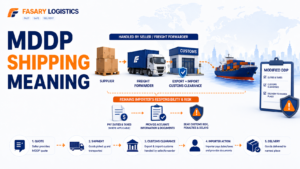
DDP-style shipping can simplify the buyer’s experience, but it must be clearly written. It may include customs coordination, duty/GST handling, and final delivery depending on the quote scope.
Non-DDP shipments usually require the buyer/importer to arrange broker setup and pay duty/GST separately. This can give the importer more control, but it also requires more preparation.
| Scope | Who usually handles customs cost | What to confirm |
|---|---|---|
| DDP-style | Seller, forwarder, or their arrangement depending on written scope | Who acts as importer, whether duty/GST is included, and what exclusions apply |
| Non-DDP / DAP-style | Buyer/importer usually pays duty/GST separately | Broker setup, importer information, and payment responsibility |
| Standard freight with separate broker | Buyer/importer and their broker | Broker filing, importer account, duty/GST payment, and release coordination |
DDP does not eliminate the need for accurate product documents. If the product description, declared value, or supporting documents are wrong, the shipment can still face questions.
Do not assume DDP always includes everything. Do not assume DDP guarantees customs clearance. Confirm the Importer of Record arrangement, duty/GST responsibility, broker role, exclusions, and final delivery scope in writing. For a route-specific duty-paid guide, see DDP shipping from China to Canada.
DDP or Non-DDP?
Share your quote, product details, invoice value, shipment size, Canadian destination, and duty/GST preference. We’ll help check whether customs scope, broker setup, and exclusions are clear.
*Fast response. No obligation.
Common Customs Problems When Importing from China to Canada
Most customs problems come from unclear or inconsistent information. The problems below are common, but many can be reduced by preparing documents before shipping.
| Problem | What causes it | How to reduce the risk |
|---|---|---|
| Vague product description | Invoice says “goods,” “parts,” “hardware,” or “accessories” | Use clear product name, material, size, and use. |
| Under-declared value | Supplier lowers the invoice value to reduce duty/GST | Use the real commercial transaction value. |
| Missing customs broker or importer setup | Broker is not assigned or importer details are not ready | Confirm broker and importer information before arrival. |
| Mismatched invoice and packing list | Quantity, weight, carton count, or product details do not match | Review documents before cargo leaves China. |
| Missing certificates for regulated goods | Product needs permit, safety document, or agency review | Check product requirements before booking. |
| Unclear DDP / duty responsibility | Buyer assumes duties are included but quote does not say clearly | Confirm DDP, non-DDP, duty, GST, and exclusions in writing. |
In our experience clearing China-to-Canada shipments, the two surprises that cost importers most are both fixable before the cargo ships. One is GST/HST: importers often budget a 5% federal rate, then the tax is assessed at the destination-province HST — 13–15% in Ontario and much of Atlantic Canada — on the duty-inclusive value, so the tax line lands two or three times higher than expected. The other is the product description: a supplier HS code that looked fine at booking doesn’t survive CBSA review because the invoice says “accessories” instead of a name, material, and use. Both are locked in by reviewing the destination province and the invoice wording before departure, not after the shipment is sitting unreleased.
Avoid overly broad descriptions and unrealistic customs assumptions. Customs release depends on correct information, not only on the shipping method.
Best Customs Setup by Importer Type
The best customs setup depends on experience, shipment type, and how much responsibility the importer wants to manage directly.
| Importer type | Practical setup | Main watchout |
|---|---|---|
| First-time importer | DDP-style or guided door-to-door service may be simpler | Confirm what is included and who is importer. |
| Amazon FBA seller | DDP-style or forwarder-supported setup is often used | Amazon does not replace importer/broker responsibility. |
| Regular commercial buyer | Own broker plus clear freight scope may give more control | Requires internal document and payment coordination. |
| Urgent air shipment | Pre-check documents before flight departure | Fast freight still delays if documents are incomplete. |
There is no single best setup for every shipment. The right approach depends on shipment value, product type, import frequency, and how much customs responsibility the buyer wants to control.
What Information Should You Send Before Shipping?
A forwarder or broker needs accurate information before cargo leaves China. Sending only a product name is usually not enough.
| Information needed | Example | Why it matters |
|---|---|---|
| Product name | LED desk lamp | Starting point for customs review |
| Detailed product description | Aluminum LED desk lamp for household use | Helps CBSA understand the goods |
| Material | Aluminum body, plastic base | Supports HS code review |
| Intended use | Indoor household lighting | Helps clarify classification |
| HS code if available | Supplier-provided code | Useful starting point for broker review |
| Commercial invoice value | USD 8,500 | Used for duty/GST discussion |
| Packing list | 80 cartons, 1,200 kg, 6.5 CBM | Confirms physical cargo details |
| Supplier name | Shenzhen supplier name | Required for commercial documents |
| Importer name / business info | Canadian company details | Helps broker setup and importer responsibility |
| Shipping method | Sea LCL / FCL / air / express | Affects transport document and release timing |
| Destination address | Toronto warehouse / Vancouver 3PL | Needed for final delivery after release |
| DDP or non-DDP preference | DDP preferred / broker handles separately | Clarifies duty/GST responsibility |
| Permits or certificates if applicable | Test report, safety certificate, origin document | Needed for regulated goods |
Prepare Before Cargo Leaves China
Send your commercial invoice, packing list, product description, HS code if available, importer details, and Canadian destination. We’ll help review the basic customs preparation checklist before departure.
*Fast response. No obligation.
How to Prepare Before Cargo Leaves China
Before the cargo leaves China, check these items:
- Confirm product name, material, use, and detailed description.
- Review the commercial invoice and packing list for consistency.
- Confirm the HS code or prepare enough product details for broker review.
- Confirm importer and broker setup.
- Confirm whether the quote is DDP or non-DDP.
- Check whether permits or certificates are needed.
- Prepare documents before vessel or flight departure.
Customs preparation should happen before the shipment moves, not after the cargo is already waiting in Canada.
How Fasary Logistics Helps with Customs Preparation from China to Canada
Fasary Logistics is a Shenzhen-based freight forwarder established in 2015. We help importers organize customs-related information before cargo leaves China — document review, quote scope clarification, DDP/non-DDP discussion, and communication with the relevant parties based on the shipment scope — so the entry CBSA receives is clean the first time.
| What you send | What Fasary checks | Why it matters |
|---|---|---|
| Product details and material | Product description quality | Helps reduce vague invoice descriptions. |
| Commercial invoice and packing list | Document consistency | Helps catch mismatched value, quantity, weight, or carton details. |
| HS code if available | Classification discussion support | Helps prepare broker or duty/GST review. |
| Importer and destination details | Responsibility and delivery planning | Helps clarify who handles customs and where cargo moves after release. |
| DDP or non-DDP preference | Quote scope | Helps define whether duty/GST and broker coordination are included. |
| Certificates or permits if applicable | Product-specific requirements | Helps identify missing documents before departure. |
Fasary Logistics does not guarantee customs clearance, exact duty/GST amount, no inspections, no delays, or exact delivery date. Customs scope and quote scope should be confirmed before booking.
FAQ
What documents are needed for customs clearance from China to Canada?
Common documents include the commercial invoice, packing list, bill of lading or air waybill, HS code or product details, declared value support, and certificates or permits if the product is regulated.
Does CBSA inspect every shipment from China?
No. CBSA does not physically inspect every shipment. Some shipments are released based on submitted information, while others may face document review, information requests, or inspection.
How is import duty from China to Canada calculated?
Import duty depends mainly on HS classification, declared value, country of origin, and tariff treatment. The exact duty should be confirmed with a broker or official source.
Does GST apply to imports from China to Canada?
Yes. GST/HST usually applies to imported commercial goods and is assessed on the duty-inclusive value at the destination-province rate — 5% GST in Alberta, up to 13–15% HST in Ontario and much of Atlantic Canada, with Quebec adding QST. Confirm the current provincial rate with your broker or the CRA.
Can a shipment clear customs before it arrives in Canada?
Some shipments can be prepared before arrival if documents are ready and the broker submits the entry information early. Final release still depends on CBSA review and shipment status.
Is DDP better for first-time importers?
DDP-style shipping can be easier for first-time importers because it may bundle customs coordination, duty/GST handling, and delivery under one quote. However, the written scope and importer arrangement must be confirmed.
Who handles customs if I use a freight forwarder?
It depends on the service scope. The forwarder may coordinate customs support through a broker, or the importer may use a separate broker. Always confirm broker role, importer responsibility, and duty/GST payment before booking.
Conclusion
Smooth customs clearance from China to Canada depends on accurate documents, HS code, declared value, importer setup, duty/GST responsibility, and clear DDP or non-DDP scope.
The best time to fix customs details is before the cargo leaves China, not after it arrives in Canada. Review the commercial invoice, packing list, product description, importer information, broker setup, and duty/GST responsibility before booking.
Fasary Logistics, established in 2015, reviews the two lines that decide whether a China-to-Canada shipment clears cleanly — the product description that survives CBSA review, and the written duty/GST and DDP treatment — before the cargo ships, so the entry is right the first time. If you are not sure what customs documents or quote scope your shipment needs, send us your product details, invoice value, packing details, supplier city, Canadian destination, and DDP/non-DDP preference, and we’ll help review the preparation points before shipping.