A U.S. customs exam from China to USA is not a rejection—but it is a billing event. A VACIS X-ray may add 1–2 days and a few hundred dollars, while an intensive exam at a Centralized Examination Station (CES) can hold your container for 7–14 days and generate $1,000+ in bonded transport, unloading, and storage fees. In our experience, the importers who lose the most money during exams are the ones who dispatched trucks before official release or never confirmed who pays CES fees in their DDP quote. Below is the exact exam-type breakdown, the fee structure, and the release steps that get your cargo moving.
A customs exam does not automatically mean the shipment will be rejected or seized. However, it can delay delivery and create exam-related charges such as terminal handling, CES fees, bonded transport, storage, demurrage, detention, or re-delivery. If you ship under a well-defined DDP service, the forwarder may help coordinate more of these moving parts, but CBP can still examine the cargo. For official context, CBP explains that cargo entering the United States may be examined to verify compliance in its CBP cargo examination guidance.
Quick Answer: What Should You Do If Your Shipment Is Selected for Exam?
| Step | What it means | What importer should do |
|---|---|---|
| Confirm the exam type | The shipment may be under VACIS, tailgate, intensive, USDA, PGA, or document review | Ask the broker or forwarder for the exact exam type and current status. |
| Confirm cargo location | Cargo may be at terminal, CFS, airport warehouse, CES, or in bonded movement | Ask where the cargo is physically located now. |
| Ask whether CES movement is required | Intensive exams often require movement to a Centralized Examination Station | Confirm bonded transport, CES facility, and who coordinates it. |
| Send requested documents quickly | CBP or the broker may need invoice, packing list, photos, payment proof, or compliance documents | Provide clean and consistent documents without changing facts. |
| Ask what fees may apply | Exam handling, CES, storage, chassis, demurrage, or re-delivery may occur | Ask whether fees are included, excluded, or billed at actual cost. |
| Wait for official release before delivery | A truck should not be dispatched before the exam hold is removed | Confirm release with the broker or forwarder first. |
| Keep exam invoices and records | Exam-related cost and timing may need future reference | Save CES invoices, terminal invoices, broker emails, and release records. |
Importers cannot force CBP to release cargo faster. The practical response is to support the broker quickly, keep documents consistent, understand possible fees, and wait for official release before arranging final delivery. DDP may simplify coordination, but it does not prevent customs exams. Exam fees, CES charges, storage, and re-delivery responsibility should be confirmed in writing before shipping.
Customs Exam Under DDP?
Send us your exam notice, B/L or AWB, invoice, packing list, product details, cargo location, and DDP quote scope. We’ll help review the exam type, possible fees, and next practical steps.
*Fast response. No obligation.
Customs Exam vs Customs Hold: What Is the Difference?
A customs exam and a customs hold can both delay cargo, but they are not always the same issue. If your broker mentions a specific hold code, compare it with a broader customs hold from China to USA, 5H customs hold, or 9H customs hold explanation. This article focuses only on customs exams.
| Term | Meaning | What to ask |
|---|---|---|
| Customs hold | CBP or another agency has paused the release process | What hold code or status appears, and what response is needed? |
| Customs exam | CBP or another agency wants to inspect or review the cargo or documents | What exam type is ordered, and where is the cargo? |
| Customs release | CBP has released the cargo for import entry purposes | Is the hold removed in the system? |
| Cargo release | Terminal, CFS, airline, CES, or carrier allows physical pickup | Are terminal/CES fees paid, and is cargo available? |
Types of U.S. Customs Exams
VACIS / X-Ray Exam
A VACIS exam is a non-intrusive X-ray scan. The container is usually not opened. Instead, the cargo is scanned so CBP can compare the image against shipment data or look for anomalies. It usually happens at or near the port terminal. The importer should ask: Has the VACIS exam been completed? Did CBP request additional documents? Is the shipment released or escalated to another exam type? What terminal or handling fees may apply?
Tailgate Exam
A tailgate exam is a limited visual inspection. The container doors may be opened, and CBP may inspect visible cargo near the back of the container. It is less disruptive than an intensive exam because the cargo is not usually fully unloaded. Importers should ask whether the cargo remains at the terminal, whether the seal was broken and replaced, and whether any additional exam has been ordered.
Intensive Exam
An intensive exam is the most disruptive common exam type. Cargo may be moved to a CES, unloaded, opened, segregated, inspected, and reloaded. This can create more time and cost because it may involve bonded transport, CES labor, storage, reloading, and additional coordination. Importers should ask which CES is handling the cargo, what documents are requested, and what fees may be expected.
USDA / Agriculture Inspection
A USDA or agriculture-related inspection may focus on pests, wood packaging, plant materials, or other agriculture risks. For shipments from China, wood pallets or crates may be checked for proper treatment and markings. Importers should confirm whether wood packaging is used and whether the supplier followed the required treatment or marking rules. If the shipment contains agricultural or wooden materials, prepare supporting details early. See AQI customs hold for agriculture-related holds.
PGA Review
A Partner Government Agency review may involve agencies such as FDA, FCC, EPA, CPSC, or USDA depending on the product. The review may focus more on compliance documents than on ordinary freight documents. Importers should ask what agency is involved, what documents are needed, and whether the broker already submitted the required data. Product photos, test reports, certifications, or manufacturer details may be requested.
What Is a CES in a Customs Exam?
CES means Centralized Examination Station. For intensive exams, cargo may be moved under bond to a CES where workers unload, open, segregate, reload, or hold cargo while CBP examines it.
| CES item | What it means | Why it matters |
|---|---|---|
| Bonded movement | Unreleased cargo moves from terminal to CES under bonded control | Creates bonded transport cost and needs coordination. |
| Unloading | CES workers remove cargo from the container or shipment unit | Labor fees may apply. |
| Physical inspection | CBP reviews the cargo, packaging, labels, or selected cartons | Release depends on CBP or agency review. |
| Reloading | Cargo is reloaded after inspection | Additional labor and handling cost may apply. |
| Storage | Cargo waits at terminal or CES during the exam process | Daily storage may apply after free time. |
| CES invoice | Facility invoice for exam-related work | Usually must be paid before cargo release or final delivery. |
In our experience, the most expensive intensive exam we’ve tracked cost an importer $2,300: $450 bonded drayage to the CES, $800 unloading/reloading labor, $700 storage over 12 days, plus broker fees. The importer’s DDP quote said “exam fees included” but the CES invoice was billed “at actual cost”—a distinction that only mattered after the bill arrived. Always confirm in writing whether exam, CES, storage, and re-delivery are included or billed at actual cost before shipping. A CES exam is not controlled by the importer or forwarder. The forwarder can coordinate, track, and communicate, but CBP and the CES control the exam process and release timing.
Why Are Shipments from China Selected for Customs Exam?
Some exams are random. Others may be triggered by shipment data, product risk, importer history, document mismatch, or agency requirements. If classification is a key concern, review HS code for imports from China to USA before future shipments. If the cargo moves by ocean, ISF filing from China to USA should also be consistent with shipment details.
| Possible reason | What it may mean | What to prepare |
|---|---|---|
| Random CBP selection | Shipment is selected for routine enforcement | Wait for exam completion and provide documents if requested. |
| Vague product description | Invoice does not clearly describe the goods | Use specific product name, material, and use. |
| Inconsistent invoice and packing list | Quantity, weight, or carton details do not match | Provide corrected explanation through the broker. |
| HS/HTS code concern | Classification may not match the product | Prepare product specs and broker classification support. |
| Declared value concern | Invoice value may seem unusually low | Prepare proof of payment matching the transaction value. |
| IP/trademark concern | Goods may resemble protected brand or design | Prepare authorization documents if relevant. |
How Long Does a Customs Exam Take?
There is no guaranteed customs exam timeline. Timing depends on port workload, CBP availability, CES backlog, document response time, exam type, and whether another agency is involved.
| Exam type | Typical timing pattern | What affects timing |
|---|---|---|
| VACIS / X-ray | Often shorter (1–3 days) | Terminal schedule, scanner availability, CBP review, escalation |
| Tailgate | Often several additional days | Officer availability, terminal access, follow-up questions |
| Intensive exam | Can take 7–14+ days | Bonded transport, CES backlog, unloading, CBP inspection, reloading, storage |
| USDA / agriculture | Varies by inspection and finding | Agriculture specialist availability, wood packaging issues, treatment |
| PGA review | Varies widely | Agency backlog, document completeness, product type |
| Document-related exam | Depends heavily on response time | How quickly the importer provides complete documents |
Do not schedule final delivery only based on vessel arrival or flight arrival. During a customs exam, final delivery should be planned after official release and cargo availability are confirmed.
What Fees Can Apply and Who Pays?
Exam fees are usually logistical or facility charges, not import duties. They can come from the terminal, CES, bonded trucker, carrier, broker, or warehouse.
| Fee / setup | When it may apply | Who usually pays or what to confirm |
|---|---|---|
| Exam or terminal handling fee | Cargo is positioned, scanned, or handled for inspection | Importer or responsible party usually pays. |
| CES unloading / reloading | Intensive exam requires cargo to be opened and handled | Confirm CES invoice and labor charges. |
| Bonded transport | Cargo moves from terminal to CES under bond | Confirm who arranges and pays bonded drayage. |
| Storage | Cargo waits at terminal, CFS, or CES beyond free time | Ask free time and daily rate. |
| Demurrage / detention | Container is delayed at port or not returned on time | Confirm carrier free days and who pays delay charges. |
| Chassis | Container stays on rented chassis during delay | Ask whether chassis charges apply. |
| DDP quote scope | DDP shipment faces exam-related charges | Confirm whether exam, CES, storage, re-delivery are included or excluded. |
The Importer of Record or the party responsible under the shipment agreement usually pays exam-related charges. If you are using DDP shipping from China to USA, DDP may simplify communication and billing, but exam fees are only included if the written DDP quote says so. For cost category differences, read import duty from China to USA. Import duty is not the same as CES fees, storage, bonded transport, or exam handling charges.
Are Exam Fees Included?
Share your DDP quote, exam notice, cargo location, and any terminal or CES fee notice. We’ll help check whether exam fees, storage, bonded transport, and re-delivery are included or separate.
*Fast response. No obligation.
What Documents May Be Requested During a Customs Exam?
During an exam, CBP or another agency may request documents to verify product identity, value, classification, origin, or compliance. HTS code support may also be requested if classification is questioned. Avoid sending inconsistent revised documents unless the broker explains how the correction should be made.
| Document | Why it may be requested | What to check |
|---|---|---|
| Commercial invoice | Verifies seller, buyer, product description, quantity, and value | Make sure it reflects the actual transaction. |
| Packing list | Helps locate cartons and verify physical shipment details | Carton count, weight, and dimensions should match. |
| Proof of payment | Supports declared value | Payment record should match invoice value. |
| Product photos | Helps identify the goods quickly | Show product, packaging, labels, and materials. |
| Material / use explanation | Supports HTS classification and product understanding | Explain material, function, and intended use clearly. |
| Product compliance documents | Supports agency review | Prepare test reports, certificates, registrations, or authorization. |
What Should You Do During a Customs Exam?
Use this practical checklist:
- Ask the broker for the exam type. VACIS, tailgate, intensive, USDA, PGA, or document review require different expectations.
- Confirm cargo location. The cargo may be at port, CFS, airport warehouse, CES, or in bonded movement.
- Ask if CES movement is required. Intensive exams often create bonded transport and CES fees.
- Send requested documents quickly. Invoice, packing list, product photos, proof of payment, and compliance documents should be ready.
- Ask what fees and free time may apply. Check storage, demurrage, detention, CES, and re-delivery exposure.
- Avoid submitting inconsistent revised documents. Corrections should be coordinated through the broker.
- Wait for official release before arranging final delivery. Do not dispatch trucks based only on vessel arrival or informal updates.
If your forwarder offers DDP service, this is where DDP can be especially useful: one logistics coordinator can help track exam status, broker communication, fee responsibility, and final delivery after release. The key is to confirm what the DDP quote covers before shipping.
DDP, Amazon FBA, and Customs Exams
DDP and Customs Exams
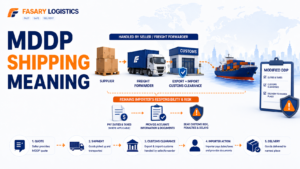
DDP does not prevent customs exams. CBP can select DDP shipments for VACIS, intensive exam, PGA review, or document review just like any other shipment. The advantage of a well-managed DDP service is operational simplicity. The buyer may not need to separately coordinate broker communication, duty-paid scope, destination handling, and final delivery. However, DDP should be confirmed in writing: Are customs exam fees included or billed separately? Are CES charges included or billed at actual cost? Are storage, demurrage, detention, or re-delivery included? Who communicates with the broker during the exam? What documents does the buyer still need to provide? A good DDP quote should make the customs exam process easier to coordinate, not pretend exams cannot happen.
Amazon FBA and Customs Exams
Amazon does not act as Importer of Record for third-party sellers and does not handle exam fees or CBP document requests. Final FBA delivery must wait until official release. If the exam delay causes the delivery appointment to expire, the forwarder may need to reschedule the Amazon delivery after release. For broader FBA logistics planning, see Amazon FBA shipping from China to USA.
Need DDP Exam Support?
Send your DDP shipment details, broker update, exam notice, product documents, and final delivery address. We’ll help organize the exam response and post-release delivery planning.
*Fast response. No obligation.
How to Reduce Customs Exam Risk Before Shipping
Random exams cannot be prevented. But importers can reduce document-triggered exam risk by preparing cleaner shipment data before departure.
- Use accurate commercial invoice descriptions.
- Use actual transaction value.
- Confirm HS/HTS code with broker support when needed.
- Prepare a consistent packing list.
- Check regulated product documents before shipping.
- Send documents to the broker or forwarder before arrival.
For DDP shipments, the same preparation matters. The forwarder still needs accurate product description, value, packing list, and compliance information to coordinate the entry and respond if CBP asks questions. For the broader import process, see customs clearance from China to USA.
What Information Should You Send for Exam Support?
If your shipment is already selected for exam, organize the information below before contacting your broker or forwarder.
| Information needed | Why it helps |
|---|---|
| Shipment tracking / BOL / AWB | Identifies the exact shipment and entry. |
| Exam notice if available | Shows exam type or hold status. |
| Cargo location if known | Helps track terminal, CFS, airport, or CES status. |
| Commercial invoice & Packing list | Supports product description, value, and cargo identification. |
| Product photos & Material/use explanation | Helps explain the goods and supports classification review. |
| Proof of payment | Supports declared value. |
| Importer of Record & bond details | Confirms responsible party and formal entry support. |
| Compliance documents if applicable | Supports PGA review. |
| Amazon FBA shipment ID if applicable | Helps reschedule final delivery after release. |
How Fasary Logistics Helps with Customs Exam Support
Fasary Logistics helps importers organize exam-related information and coordinate the practical next steps with the relevant parties. For DDP shipments, we also help clarify what is included in the duty-paid scope and what may be billed separately if an exam occurs.
Fasary Logistics does not guarantee customs release, exam timeline, fee amount, no storage, no delay, or CBP decision outcome. Final release depends on CBP or agency review.
FAQ
What is a customs exam from China to USA?
A customs exam is a CBP or agency review before cargo release. It may involve document review, X-ray scanning, physical inspection, or product compliance review.
What is the difference between customs hold and customs exam?
A customs hold is a release pause or status. A customs exam is an inspection or review action. Some holds lead to exams, but not every hold is a physical exam.
What is a VACIS exam?
A VACIS exam is a non-intrusive X-ray scan. The container is usually not opened unless CBP decides additional inspection is needed.
What is an intensive exam?
An intensive exam is a physical inspection. Cargo may be moved to a CES, unloaded, opened, inspected, and reloaded before release.
What is a CES fee?
A CES fee is a facility or handling charge related to intensive exam work, such as bonded movement, unloading, inspection support, reloading, or storage.
How long does a customs exam take?
There is no guaranteed timeline. Timing depends on exam type, port workload, CBP availability, CES backlog, agency review, and document response time.
Who pays customs exam fees?
The Importer of Record or the responsible party under the shipment agreement usually pays. For DDP shipments, exam fees may be included or excluded depending on written quote scope.
Conclusion
A customs exam from China to USA means CBP or another agency needs additional review before release. It does not always mean rejection, but it can delay final delivery and create exam-related charges. The best response is to confirm exam type, cargo location, requested documents, possible fees, and official release status before arranging final delivery. If you use DDP, make sure the written quote explains exam fee scope, storage responsibility, CES charges, and post-release delivery coordination.
If your shipment has been selected for a U.S. customs exam, send Fasary Logistics your exam notice, invoice, packing list, product details, cargo location, DDP quote if applicable, and broker updates. We can help review the next practical steps before final delivery.