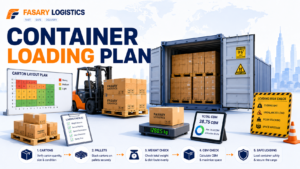
A 20FT (20GP) container from China to USA costs roughly $1,400–$1,450 to the West Coast and $2,100–$2,350 to the East Coast or inland points, before destination charges, drayage, and delivery. But the 20FT is a weight-efficient box, not a volume-efficient one: it holds only ~28–29 CBM of practical loading and hits road weight limits well before its space is full. In our experience, the 20FT wins for dense cargo like tiles, stone, and machinery — and loses for light bulky goods where a 40HQ gives a lower per-unit cost. Below is when 20GP beats LCL and 40FT, and what a real quote must include.
A 20FT container should not be chosen only because it sounds smaller or cheaper. Importers should compare 20GP against LCL and 40FT/40HQ based on CBM, gross weight, cargo type, and delivery scope before booking.
Quick Answer: When Is a 20FT Container the Right Choice?
| Cargo situation | Is 20FT / 20GP a good choice? | Why |
|---|---|---|
| Heavy and dense cargo | Yes | You can use the container’s weight capacity efficiently. |
| Around 14–20+ CBM | Often worth comparing | 20GP may beat LCL after destination and handling fees. |
| Light and bulky cargo | Usually no | 40FT or 40HQ often gives better per-unit cost. |
| Only 5–10 CBM | Usually no | LCL is often more practical. |
| Cargo near max weight but low volume | Yes | 20GP is designed well for dense cargo. |
| Amazon FBA heavy goods | Conditional | It can work if pallet rules, appointments, and unloading are planned. |
20FT is mainly a weight-efficient container, not a volume-efficient container. It is strongest when the cargo reaches weight limits before using all container space.
For light and bulky goods, 40FT or 40HQ may be more economical because they provide much more loading volume. If you are unsure, request a complete shipping quote from China to USA instead of comparing only the base ocean rate.
Not Sure If 20GP Fits?
Send us your cargo type, total CBM, gross weight, supplier city, cargo ready date, and U.S. destination ZIP code. We’ll help compare 20GP, LCL, and 40FT options before you book.
*Fast response. No obligation.
What Affects 20FT Container Shipping Cost from China to USA?
The cost of a 20FT container from China to the USA is not only the ocean freight rate. A port-to-port rate and a door-to-door rate can be very different.
| Cost factor | Why it matters |
|---|---|
| Supplier city / origin port | Local pickup and origin trucking can change the total cost. |
| U.S. destination ZIP code | Final delivery to California, New Jersey, Texas, or inland locations can differ greatly. |
| Cargo weight | Heavy cargo may require careful loading, weight checks, or delivery planning. |
| Cargo volume / CBM | Determines whether 20GP, LCL, or 40FT is more practical. |
| Season and carrier space | Rates and space can change during peak season or tight capacity periods. |
| Service scope | Port-to-port, port-to-door, and door-to-door quotes include different services. |
| Final delivery conditions | Dock, forklift, appointment, unloading time, and access affect delivery cost. |
As a 2026 reference, a 20GP from China to the USA runs about $1,400–$1,450 to Los Angeles / Long Beach and $2,100–$2,350 to New York or Chicago inland, before destination charges, drayage, and delivery. The most important rule is simple: do not compare only the ocean rate. Compare the full quote scope, including destination handling, customs support if included, drayage, chassis, and final delivery.
20FT vs LCL: When Does 20GP Become Worth Comparing?
LCL means Less than Container Load. Your cargo shares container space with other importers and is usually charged by CBM. 20GP means you book the full container for your own cargo.
| Cargo volume | Usually compare | Why |
|---|---|---|
| Under 5 CBM | LCL | A full container usually wastes too much space. |
| 5–10 CBM | Usually LCL | 20GP may still be too large unless the cargo is very heavy or fragile. |
| 10–14 CBM | LCL vs 20GP | Destination fees and handling may change the result. |
| 14–20+ CBM | 20GP often becomes attractive | FCL can beat LCL once fees and handling are included. |
| Heavy dense cargo | 20GP may win earlier | Weight and handling risk can matter more than CBM. |
| Fragile cargo | 20GP may be safer | Less cargo mixing and less warehouse handling. |
In our experience booking 20FT containers from China, the two costliest assumptions are that “smaller container = cheaper” and that you can load a 20GP to its full 33 CBM theoretical capacity. In practice we plan around 28–29 CBM, and we regularly see importers with 16–18 CBM of dense cargo discover the 20GP is cheaper than LCL only after destination CFS fees are added — while light-bulky shippers overpay for a 20FT that runs out of space. We always compare 20GP against LCL and 40HQ using final CBM, gross weight, and destination fees before booking. For smaller shipments, review LCL shipping rates from China to USA before choosing FCL.
20FT vs 40FT / 40HQ: Weight vs Volume
A 20FT container is not always cheaper just because it is smaller. The better choice depends on cargo density.
| Container type | Best for | Main warning |
|---|---|---|
| 20FT / 20GP | Heavy and dense cargo | Limited space for bulky goods. |
| 40FT / 40GP | General commercial cargo | More volume, but not double the payload. |
| 40HQ | Light and bulky cargo | Better volume, but not ideal for very heavy cargo. |
20FT is usually better for weight. 40FT and 40HQ are usually better for volume. For example, ceramic tiles, stone, machinery parts, and metal hardware often fit 20GP logic. Furniture, apparel, plush toys, plastic products, and large cartons often fit 40FT or 40HQ logic.
If you are comparing larger containers, see 40FT container shipping cost from China to USA. For loading volume and dimensions, review 20GP, 40GP, and 40HQ container sizes.
Route and Delivery Factors That Affect 20FT Container Cost
Supplier city affects local pickup and origin trucking. A supplier near Shenzhen, Ningbo, Shanghai, Qingdao, or Xiamen may use a different port and local trucking plan.
The U.S. ZIP code affects port choice, drayage, rail, truck delivery, and appointment planning. West Coast routing may be faster for some destinations, while East Coast or inland routing may be better depending on final delivery. For example, shipping to Los Angeles and shipping to New Jersey should not be judged by the same ocean rate only. Inland delivery can change the total cost. For geography planning, see the shipping routes from China to USA map.
What a 20FT Container Quote Should Include
A 20FT container quote should clearly show what is included and what is excluded. A low port-to-port rate may not represent your actual delivered cost.
| Quote item | Why to confirm |
|---|---|
| Origin pickup | Confirms whether supplier pickup is included. |
| Export handling | Clarifies China-side handling and export service scope. |
| Ocean freight | Shows the main container freight charge. |
| Destination handling | Avoids surprise terminal or destination-side charges. |
| Customs support | Confirms whether customs coordination is included or separate. |
| Drayage / chassis | Important for moving the container from port or rail ramp. |
| Final delivery | Confirms delivery to warehouse, 3PL, Amazon, or business address. |
| Demurrage / detention responsibility | Clarifies who pays if container pickup or return is delayed. |
Do not let the quote only say “20FT ocean freight.” For business planning, you need to know whether it is port-to-port, port-to-door, or door-to-door. For wider ocean service context, see sea shipping from China to USA.
Best Cargo Types for a 20FT Container
A 20FT container works best when cargo is heavy and space is not the main limitation.
- Machinery
- Metal products
- Ceramic tiles
- Stone
- Hardware
- Dense building materials
- Heavy industrial goods
- Canned or dense packaged goods
These products often reach weight limits earlier than volume limits. In that case, a 20GP may provide better cost logic than LCL or a larger container.
When a 20FT Container Is Not the Best Choice
A 20FT container may not be the best choice when:
- Cargo is only 5–10 CBM and LCL is clearly more practical.
- Cargo is light and bulky.
- A 40HQ gives better per-unit cost.
- Final delivery cannot receive a full container.
- Unloading conditions are not ready.
The main mistake is assuming that “smaller container = cheaper shipment.” For many light goods, 20FT can create a higher per-unit cost because the container runs out of space too quickly.
What Information Should You Send for a 20FT Container Quote?
A useful 20FT container quote needs cargo details and delivery details, not only the product name.
| Information needed | Example |
|---|---|
| Product type | Ceramic tiles / metal parts / machinery |
| Total CBM | 18 CBM |
| Gross weight | 19,000 kg |
| Carton or pallet details | 20 pallets, pallet size and height |
| Supplier city and address | Foshan, Guangdong / Ningbo, Zhejiang |
| Destination ZIP code | 07036 / 60106 / 92335 |
| Delivery address type | Warehouse / Amazon / 3PL / business address |
| Loading / unloading conditions | Dock, forklift, crane, or appointment required |
| Preferred scope | Port-to-port / door-to-door / not sure |
| Cargo ready date | May 20 |
Need a 20FT Quote Review?
Share your product type, CBM, gross weight, pallet details, supplier address, destination ZIP code, and delivery scope. We’ll help check whether the 20FT quote is practical.
*Fast response. No obligation.
FAQ
How much does it cost to ship a 20FT container from China to USA?
The cost depends on supplier city, origin port, U.S. destination ZIP code, season, cargo weight, service scope, and final delivery conditions. As a 2026 reference, a 20GP runs about $1,400–$1,450 to the West Coast and $2,100–$2,350 to the East Coast or inland, before destination charges. A port-to-port ocean rate is not the same as door-to-door cost.
Is a 20FT container cheaper than LCL?
Sometimes. A 20FT container can become cheaper than LCL when cargo volume grows enough that LCL per-CBM charges and destination handling become inefficient. This often happens near the upper LCL range.
When should I choose a 20FT container instead of LCL?
Choose 20FT when the cargo is large enough, heavy enough, fragile enough, or close enough to the LCL/FCL breakpoint that full-container handling becomes more practical.
When should I choose 20FT instead of 40FT or 40HQ?
Choose 20FT when your cargo is heavy and dense, and you reach weight limits before filling a larger container. Choose 40FT or 40HQ when volume matters more than weight.
What cargo is best for a 20FT container?
20FT containers are best for heavy and dense cargo such as machinery, metal products, ceramic tiles, stone, hardware, dense building materials, and industrial goods.
Does a 20FT container quote include final delivery?
Not always. Many quotes are port-to-port only. Importers should confirm whether origin pickup, destination handling, customs support, drayage, chassis, and final delivery are included.
Conclusion
A 20FT container is best for heavy and dense cargo, not automatically for every small shipment. The right decision depends on CBM, gross weight, cargo type, destination ZIP code, delivery scope, and whether LCL or 40FT/40HQ gives a better total cost.
For machinery, metal products, tiles, stone, hardware, and dense industrial cargo, 20GP can be a strong option from China to the USA. For light and bulky goods, 40FT or 40HQ is usually better. For smaller shipments, LCL may still be the smarter choice.
If you are unsure whether 20GP, LCL, or 40FT is more practical, send Fasary Logistics your cargo volume, gross weight, product type, supplier city, and destination ZIP code. We can help compare the quote scope before you book. For the full freight process, see shipping from China to USA.