FCL (Full Container Load) shipping from Vietnam to US means booking a dedicated ocean container — a 20FT from about $2,250, a 40HQ from about $3,150 — with ocean transit of 18–28 days to the West Coast or 30–45 days to the East Coast. It fits cargo that is large, heavy, fragile, or high-value enough to justify a full container instead of sharing space through LCL. Because the container rate is flat, the more you fill it, the lower your per-CBM cost — which is why FCL often beats LCL once cargo reaches roughly 10–15 CBM. Below is how to choose between 20FT, 40FT, and 40HQ, confirm factory loading, and plan U.S. delivery before you book.
A full container quote is not only an ocean rate. Importers must confirm container size, Vietnam factory loading ability, cargo weight, U.S. drayage, live unload or drop-and-pick, free time, and final delivery scope before booking. For the wider import process, see shipping from Vietnam to USA.
Quick Answer: When Is FCL the Right Choice?
| Question | Short answer | What to confirm |
|---|---|---|
| What does FCL mean? | Full Container Load; your cargo uses a dedicated 20FT, 40FT, or 40HQ container. | Confirm that the shipment volume and delivery plan justify a full container. |
| When is FCL a good option? | When cargo is larger, fragile, high-value, or needs fewer handling steps. | Compare container cost against LCL cost and destination charges. |
| When is FCL not a good option? | When cargo is very small, urgent, or cannot be received as a container delivery. | Compare LCL, air freight, or a 3PL route. |
| Which container sizes are common? | 20FT, 40FT, and 40HQ. | Confirm carton dimensions, total CBM, and gross weight. |
| Is FCL better than LCL? | Often yes for larger or handling-sensitive cargo, but not always for small shipments. | Check the full quote scope, not only the ocean rate. |
| What is the biggest FCL mistake? | Booking before confirming container size, loading ability, free time, and delivery method. | Confirm supplier loading and U.S. delivery requirements before booking. |
FCL can reduce handling compared with LCL, but it requires better loading and unloading planning. The container usually moves as one sealed unit, so the supplier, trucker, forwarder, and destination warehouse must be coordinated early. The main risks are wrong container size, supplier loading problems, overweight cargo, unclear quote scope, and U.S. delivery/free-time issues.
Not Sure If FCL Fits?
Send us your carton dimensions, gross weight, total CBM, pickup city, destination ZIP code, and delivery deadline. We’ll help check whether FCL, LCL, air freight, or express is more practical.
*Fast response. No obligation.
How FCL Shipping from Vietnam to US Works
A full container shipment can be simplified into six steps:
- Confirm cargo volume, weight, and container size. Use final carton dimensions, gross weight, total CBM, and product type.
- Arrange an empty container to the supplier or loading warehouse. The supplier must be ready before the truck arrives.
- Load, seal, and truck the container to the Vietnam port. The factory or warehouse loads the cargo, applies the seal, and records the seal number.
- Move by ocean freight to the U.S. The container moves under the booked vessel route.
- Handle customs release and carrier release. Customs documents, broker setup, and carrier payment/release status should be prepared before arrival.
- Arrange drayage, live unload or drop-and-pick, and empty container return. The U.S. delivery plan must fit the destination warehouse’s unloading ability.
FCL is more direct than LCL, but delays during loading, customs release, drayage, unloading, or empty return can still create extra cost.
20FT, 40FT, and 40HQ: Which Container Fits?
Container choice should be based on carton dimensions, pallet use, cargo shape, gross weight, and usable loading space. Do not choose only by container name.
| Container type | Best for | Main watchout |
|---|---|---|
| 20FT | Dense cargo such as metal parts, tiles, stone, machinery, or canned goods | You may reach weight limits before filling the container. |
| 40FT | General commercial cargo, mixed inventory, and medium-volume container shipments | Palletized cargo may use space less efficiently than floor-loaded cargo. |
| 40HQ | Light and bulky goods such as furniture, garments, plastic goods, pillows, and home products | Good for volume, but still limited by gross weight and loading method. |
A 20FT often works better for dense cargo. 40FT and 40HQ are usually better for general retail or bulky goods. 40HQ is useful when volume matters more than weight. Actual loading results depend heavily on packing method: pallets make unloading easier but reduce usable container space, while floor-loading can maximize CBM but takes more labor and may require a stronger unloading plan in the U.S. For exact internal dimensions and usable capacity, see container sizes (20GP / 40GP / 40HQ). If you need to estimate volume before comparing options, use a CBM calculator.
FCL Cost from Vietnam to US: Container Rates and the FCL-vs-LCL Breakpoint
As a 2026 reference, FCL ocean rates from Vietnam to US typically run about $2,250–$3,450 for a 20FT and about $3,150–$4,350 for a 40HQ, depending on route, carrier, season, port pair, and service scope. These are ocean-rate benchmarks; the real door-to-door total adds origin trucking, destination charges, customs support, drayage, and final delivery.
The defining feature of FCL pricing is that the container rate is flat. Unlike LCL, which charges per CBM, you pay one container rate whether the container is half full or full. This means your effective per-CBM cost falls as you fill more space — which is exactly why FCL becomes attractive as volume grows.
| Your cargo volume | LCL approach (at ~$220/CBM) | FCL approach (20FT flat) | Which to check first |
|---|---|---|---|
| ~8 CBM | ~$1,760 + CFS fees | ~$2,300 (container mostly empty) | LCL usually |
| ~15 CBM | ~$3,300 + CFS fees | ~$2,300 | Compare both |
| ~25 CBM | ~$5,500 + CFS fees | ~$2,300 | FCL usually |
This is ocean freight only — destination charges, customs, and final delivery apply to both methods — but it shows the logic: once cargo reaches roughly 10–15 CBM, the LCL per-CBM charges plus destination CFS fees can approach or exceed a 20FT flat rate. That is the breakpoint where you should request both quotes. For the full delivered-cost picture, see shipping cost from Vietnam to USA.
Need Container Size Help?
Share your carton count, carton dimensions, gross weight, total CBM, product type, and loading method. We’ll help compare 20FT, 40FT, and 40HQ container options.
*Fast response. No obligation.
When to Compare FCL with LCL
FCL may become worth comparing around the higher LCL volume range, but there is no fixed CBM breakpoint for every shipment. Route, season, destination charges, cargo value, handling risk, and delivery scope all matter.
| Situation | Usually compare | Why |
|---|---|---|
| Under 5 CBM | LCL or air | A full container is usually too much space. |
| 5–10 CBM | LCL first, sometimes FCL if cargo is fragile or high-value | FCL may still be expensive unless handling control matters. |
| 10–15 CBM | LCL and FCL | Destination charges and handling risk may make FCL worth checking. |
| 15+ CBM | FCL often becomes more practical | Container control and per-unit cost can improve. |
| Fragile or high-value cargo | FCL even at lower volume | Less shared handling may reduce risk. |
| Urgent cargo | Air freight | Ocean freight may not meet the deadline. |
| Destination cannot receive container | LCL, 3PL, or transload route | A container delivery needs space, unloading ability, and access. |
If your volume is not enough for a full container, review LCL shipping from Vietnam to US before booking FCL. For urgent cargo, compare air freight from Vietnam to US. If cost is the main decision point, compare the cheapest way to ship from Vietnam to US only after quote scope is clear.
Factory Loading in Vietnam: What to Confirm
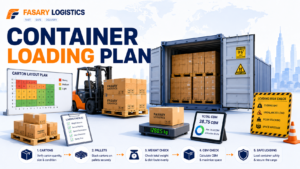
Factory loading means an empty container is sent to the supplier or loading warehouse in Vietnam. The driver does not load the cargo. The supplier must be ready with labor, equipment, space, and a loading plan.
| Loading item | Why it matters | What to confirm |
|---|---|---|
| Cargo ready date | A container should not be dispatched before goods are ready | Final production and packing date |
| Loading address | Some factories may not allow container truck access | Exact address, gate access, and road conditions |
| Truck access | 40FT and 40HQ trucks need enough turning and parking space | Whether the truck can enter safely |
| Loading labor | The supplier, not the driver, loads the cargo | Workers scheduled for loading day |
| Forklift or loading dock | Heavy pallets need equipment | Forklift, dock, ramp, or ground-loading plan |
| Palletized or floor-loaded | Affects space, loading time, and unloading method | Which method will be used and why |
| Gross weight | Overweight containers can create road and drayage issues | Total cargo weight and weight distribution |
| Seal number and loading photos | Helps document loading condition | Photos of empty, half-loaded, full, sealed container, and seal number |
If the supplier is not prepared, the truck may wait, loading may fail, or the container may miss the port cut-off.
Door-to-Door FCL Quote Scope
A full container quote can cover different parts of the route. Make sure the scope is written clearly before comparing prices.
| Scope | What it usually includes | What to confirm |
|---|---|---|
| Port-to-port | Main ocean freight between Vietnam port and U.S. port | Pickup, customs, drayage, and final delivery may be excluded. |
| Door-to-port | Vietnam pickup/loading plus ocean freight | U.S. customs and delivery may be separate. |
| Port-to-door | Ocean freight plus U.S. port pickup and delivery | Vietnam-side pickup and loading may be separate. |
| Door-to-door | Pickup/loading, ocean freight, U.S. delivery, and empty return depending on quote | Destination charges, chassis, drayage, and free time. |
| DDP-style | Door-to-door plus duty-paid responsibility if written clearly | Import responsibility, duties, taxes, exclusions, and exception fees. |
Door-to-door describes logistics coverage. DDP-style may add duty-paid responsibility depending on written quote scope, but it should not be assumed unless stated clearly. For route-scope planning, see door-to-door shipping from Vietnam to US and DDP shipping from Vietnam to US.
Final Delivery: Live Unload, Drop-and-Pick, and Amazon FBA
FCL delivery requires planning because the container, chassis, free time, unloading labor, and empty return must be coordinated.
| Delivery setup | Best for | Main risk | What to confirm |
|---|---|---|---|
| Live unload | Warehouses that can unload quickly while the driver waits | Waiting time fees if unloading is slow | Dock, forklift, labor, and free unload time |
| Drop-and-pick | Warehouses needing more time to unload | Higher trucking cost and chassis/free-time exposure | Yard space, security, and empty return deadline |
| Commercial warehouse / 3PL | Regular business inventory | Appointment or receiving rule mismatch | Appointment window, pallet rules, receiving hours |
| Amazon FBA | Larger FBA replenishment with proper prep | May need transload, palletization, labels, and appointment planning | FBA code, labels, pallet rules, and delivery appointment |
| Limited-access or residential delivery | Rare for container delivery | Access or unloading failure | Whether a 3PL, LCL, or smaller truck delivery is better |
In our experience coordinating Vietnam-to-US FCL shipments, the most common costly surprise is not the ocean rate — it is detention and demurrage. A container that sits at the U.S. port or destination yard past its free days can rack up hundreds of dollars per day, and the most frequent cause is a delivery plan that wasn’t matched to the warehouse’s unloading ability. This is why we always confirm live unload vs drop-and-pick, free time, and the empty-return deadline before booking.
Amazon FBA shipments may need a 3PL before final delivery if the cargo is floor-loaded, needs palletization, requires labels, or must be split into smaller deliveries. For FBA-specific planning, see Amazon FBA shipping from Vietnam to US. For port trucking basics, see drayage in shipping.
FCL Charges and Quote Items to Check
A full container quote should show what is included and what may be billed separately.
| Charge / item | Why it matters | What to ask |
|---|---|---|
| Ocean freight | Main container movement cost | Is the rate valid for the planned sailing date? |
| Origin trucking | Empty/full container movement in Vietnam | Is factory loading pickup included? |
| Origin port charges | Vietnam terminal and export-side charges | Are local origin charges included? |
| Destination charges | U.S. port, terminal, or release-related charges | Are destination port charges included or separate? |
| Customs broker fee | Entry support if included in scope | Will you use your own broker or the forwarder’s broker? |
| Duty/tax if applicable | Import charges based on product and value | Are they excluded, included, or only included under DDP-style scope? |
| Chassis and drayage | Needed to move the container from port/rail to destination | Is the drayage based on live unload or drop-and-pick? |
| Detention / demurrage | Applies if container pickup, unloading, or return is delayed | How many free days are included? |
| Customs exam fee | May apply if cargo is selected for exam | Who pays if an exam occurs? |
Pre-pull, yard storage, waiting time, drop trailer fee, and appointment fees may apply depending on destination and delivery conditions. For fee timing risk, see demurrage and detention charges. For the customs side, see customs clearance from Vietnam to US.
Common FCL Shipping Mistakes
| Mistake | What can go wrong | Better approach |
|---|---|---|
| Choosing the wrong container size | Cargo may not fit, or you may pay for unused space | Use final carton dimensions, CBM, and weight. |
| Using estimated carton dimensions | Quote and container plan may change after packing | Wait for final packing data when possible. |
| Not checking supplier loading ability | Container arrives, but the factory cannot load properly | Confirm labor, forklift, dock, and truck access. |
| Not planning labor or forklift | Loading or unloading takes too long | Schedule the right team and equipment. |
| Ignoring gross weight / overweight risk | Container may create road or drayage problems | Confirm total gross weight and distribution. |
| Not confirming live unload or drop-and-pick | Trucker and warehouse expectations do not match | Decide delivery method before booking. |
| Ignoring detention and demurrage | Delays can create extra daily charges | Understand free time and return deadline. |
| Assuming FCL is always cheaper than LCL | Smaller shipments may still be better by LCL | Compare both when volume is borderline. |
Most mistakes start before booking, when cargo details, loading readiness, or final delivery conditions are not confirmed.
FCL Shipping Examples
20FT Container for Heavy Cargo
A supplier in Ho Chi Minh City ships dense metal parts to a Los Angeles warehouse. A 20FT container is practical because the cargo is heavy and does not need the extra volume of a 40FT or 40HQ. The key checks are gross weight, loading equipment, U.S. road weight limits, live unload timing, and empty return.
40HQ Container for Bulky Retail Goods
A retailer ships lightweight apparel and home goods from Vietnam to a U.S. distribution center. A 40HQ may be the better choice because the cargo fills space before reaching weight limits. The importer should confirm carton dimensions, floor-loading or palletization, unloading method, and delivery appointment.
FCL Shipment Needing 3PL Before Amazon FBA
An eCommerce seller books a full container of home products for Amazon FBA. The supplier floor-loads the container to maximize space, but Amazon may require palletized delivery. The cargo moves first to a 3PL for unloading, palletization, labeling check, and appointment scheduling before final FBA delivery.
What Information Should You Send for an FCL Quote?
A realistic quote needs cargo, loading, destination, and delivery-scope information.
| Information needed | Example | Why it matters |
|---|---|---|
| Pickup city in Vietnam | Ho Chi Minh City / Hanoi / Hai Phong | Determines origin trucking and port routing |
| Supplier address | Full factory or warehouse address | Confirms truck access and pickup cost |
| Supplier ready date | November 10 | Helps match vessel schedule |
| Product type | Furniture / electronics / apparel | Helps identify handling and customs questions |
| Carton count | 800 cartons | Supports loading plan |
| Carton dimensions | 60 × 40 × 40 cm | Confirms container fit |
| Gross weight | 18,000 kg | Critical for weight and drayage planning |
| Total CBM | 55 CBM | Helps choose 40FT or 40HQ |
| Container size preference | 20FT / 40FT / 40HQ / not sure | Helps narrow the quote |
| Palletized or floor-loaded | Floor-loaded | Affects loading, unloading, and space use |
| Supplier loading ability | Forklift and dock available | Confirms whether factory loading is practical |
| Cargo value | USD 45,000 | Useful for customs and insurance discussion |
| Destination ZIP code | 75201 | Needed for final drayage delivery |
| Delivery address type | Commercial / 3PL / Amazon FBA / other | Affects delivery method |
| Live unload or drop-and-pick preference | Drop-and-pick | Changes trucking cost and free-time planning |
| Amazon FBA warehouse code if applicable | FTW1 / LAX9 / ONT8 | Needed for FBA planning |
| Required delivery date | December 15 | Helps check timing feasibility |
| Quote scope | Port-to-port / door-to-door / DDP-style / not sure | Defines included services |
Ready for an FCL Quote?
Send your pickup city, supplier address, ready date, carton dimensions, gross weight, total CBM, container preference, loading method, destination ZIP code, and quote scope.
*Fast response. No obligation.
How Fasary Logistics Helps with FCL Shipping from Vietnam to US
Fasary Logistics is a Shenzhen-based freight forwarder established in 2015. We coordinate FCL shipments from Ho Chi Minh City, Hai Phong, and Da Nang to U.S. gateways including Los Angeles, Long Beach, Oakland, New York, Savannah, and Houston, with final delivery to warehouses, 3PLs, Amazon FBA centers, and commercial addresses. We help importers review full container details before booking, so the container option, loading plan, and final delivery scope are clearer.
| What you send | What Fasary checks | Why it matters |
|---|---|---|
| CBM, gross weight, and carton dimensions | Container fit and loading logic | Helps compare 20FT, 40FT, and 40HQ. |
| Product type and packing method | Handling and loading risk | Helps decide palletized vs floor-loaded planning. |
| Supplier address and loading readiness | Factory loading feasibility | Helps avoid loading-day delays. |
| Borderline shipment volume | FCL vs LCL comparison | Helps avoid paying for an unnecessary full container. |
| U.S. destination ZIP code and delivery method | Live unload, drop-and-pick, or 3PL planning | Helps reduce free-time and delivery risk. |
| Amazon FBA / 3PL details if applicable | Labels, palletization, appointment, and transload needs | Helps plan final delivery correctly. |
| Quote scope | Included items and exclusions | Helps avoid comparing incomplete rates. |
Fasary Logistics does not guarantee cheapest cost, fastest delivery, customs clearance, delivery date, Amazon acceptance, free time, or exact final cost before cargo details and quote scope are confirmed.
FAQ
What is FCL shipping from Vietnam to US?
FCL shipping from Vietnam to US means booking a full ocean container for your cargo. The container may be loaded at the supplier, sealed, shipped by ocean, and delivered after customs and carrier release.
How much does FCL shipping from Vietnam to US cost?
As a 2026 reference, FCL ocean rates from Vietnam to US typically run about $2,250–$3,450 for a 20FT and about $3,150–$4,350 for a 40HQ, depending on route, carrier, season, and service scope. The real door-to-door total adds origin trucking, destination charges, customs support, drayage, and final delivery.
When should I use FCL instead of LCL?
Use FCL when the cargo volume is large enough, the goods are fragile or high-value, or you need fewer handling steps. If the shipment is small, compare LCL first. A good rule is to request both quotes once cargo reaches roughly 10–15 CBM.
Is FCL cheaper than LCL from Vietnam to US?
FCL can be cheaper per unit at higher volumes, but it is not always cheaper for smaller cargo. Because the container rate is flat, your per-CBM cost falls as you fill more space. Compare total cost, destination charges, and final delivery scope before deciding.
What container size should I choose?
Choose 20FT for heavy dense cargo, 40FT for general commercial goods, and 40HQ for light or bulky cargo. Final carton dimensions, gross weight, and loading method should decide the container.
Can FCL shipping be door-to-door?
Yes. Door-to-door FCL can include supplier pickup/loading, ocean freight, U.S. port pickup, drayage, final delivery, and empty return depending on the written quote scope.
What is live unload or drop-and-pick?
Live unload means the trucker waits while your warehouse unloads the container. Drop-and-pick means the container is left at the destination and picked up later after unloading.
Is FCL good for Amazon FBA shipments from Vietnam?
Yes, if the shipment is large enough and FBA requirements are planned. Many FCL-to-FBA shipments need a 3PL for transload, palletization, labeling checks, and appointment delivery.
Conclusion
FCL shipping from Vietnam to US is practical when cargo volume, handling risk, or delivery needs justify a dedicated container. The right plan depends on container size, final carton dimensions, gross weight, supplier loading ability, U.S. delivery method, free time, and quote scope.
If you are not sure whether 20FT, 40FT, 40HQ, LCL, or another method fits your shipment, send Fasary Logistics your carton dimensions, gross weight, total CBM, pickup city, destination ZIP code, delivery method, and container option before booking. For the full method and route context, see our main shipping from Vietnam to USA guide and shipping routes from Vietnam to US.