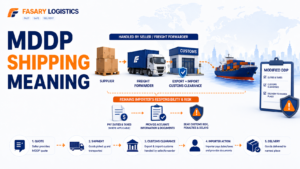
What is DDP shipping? DDP (Delivered Duty Paid) means the seller is generally responsible for arranging and paying for freight, customs clearance, duties, taxes, and delivery to the named destination. For buyers, it is the simplest import model because the seller carries the maximum logistics burden.
However, DDP is not a magic label that guarantees every fee, every service, or every delivery condition is automatically included. The exact operational scope still needs to be confirmed with the supplier or logistics provider in writing. For most buyers, DDP is best when convenience, predictable landed cost, and reduced customs complexity matter more than having full control over the import process.
Quick Answer
If you are trying to understand DDP shipping at a glance, here is how the core responsibilities break down.
| Question | Short Answer |
|---|---|
| What does DDP stand for? | Delivered Duty Paid. |
| Who pays for the freight? | The seller (or the supplier’s forwarder). |
| Who handles customs clearance? | The seller is responsible for both export and import clearance. |
| Who pays import duties and taxes? | The seller pays all duties, taxes, and border levies. |
| When does the risk transfer? | Risk transfers to the buyer only when the goods are ready for unloading at the final destination. |
Quick Decision: When Does DDP Make Sense?
| If your situation is… | DDP is usually… | Why |
|---|---|---|
| First-time importer | A strong choice | It removes customs and broker complexity |
| Amazon FBA shipment | Often the safest choice | Amazon will not act as importer of record |
| Small team with no import setup | Very practical | One supplier or provider handles most steps |
| Buyer wants full customs control | Usually not the best fit | DDP reduces transparency and broker choice |
| Highly regulated cargo | Risky unless handled by a specialist | FDA, EPA, medical, or hazardous goods need tighter control |
| Large experienced importer | Sometimes unnecessary | Standard freight may offer more control and lower total cost |
What Does DDP Shipping Mean?
In the world of international trade, buyers and sellers need a standardized language to determine who is responsible for the cargo at every stage of the journey. To solve this, the International Chamber of Commerce created a set of global trade frameworks. If you are comparing DDP with other trade terms, our FOB, CIF, EXW, DAP, and DDP guide gives a broader side-by-side explanation.
The ddp shipping meaning is rooted in these official ICC Incoterms rules. DDP is one of the 11 recognized trade terms, and it represents the maximum level of obligation for the seller and the minimum level of obligation for the buyer.
When you agree to DDP terms, you are essentially asking the seller to act as a full-service logistics provider. The seller must manufacture the goods, package them, load them onto a vessel or aircraft, navigate export regulations, cross the ocean, successfully clear import customs in the destination country, pay the local government any required taxes, and truck the goods directly to your warehouse door.
For buyers, having ddp shipping explained simply means: “I pay you one upfront price, and you ensure the goods arrive at my door without me having to deal with customs or freight companies.”
What Is Usually Included in DDP Shipping?
When asking what does ddp include, it is best to look at the shipping journey sequentially. Under a standard DDP agreement, the seller is financially and operationally responsible for almost the entire supply chain.
In practice, DDP is attractive because it bundles most of the major import tasks into one commercial arrangement. Instead of separately managing freight, customs, duty payment, and delivery, the buyer usually receives one coordinated service and one invoice.
However, because logistics providers package their services differently, the actual operational scope still needs to be explicitly confirmed in your contract.
Here is what is generally included in a standard DDP movement:
- Origin Pickup: Moving the goods from the factory to the departure port or airport.
- Export Customs: Preparing the commercial invoice, packing list, and securing export licenses.
- International Freight: Paying the ocean carrier, airline, or rail company for the main transit.
- Import Customs Clearance: Filing the entry paperwork with the destination country’s government.
- Duties and Taxes: Paying the exact tariff amounts required to legalize the goods in the destination country.
- Final Delivery: Hiring a local trucking company to bring the goods from the destination port to your facility.
| Shipping Stage | Usually Seller Responsibility Under DDP? | Notes |
|---|---|---|
| Origin Handling & Trucking | Yes | Seller moves goods to the port. |
| Export Clearance | Yes | Seller manages origin government paperwork. |
| Main Freight (Air/Ocean) | Yes | Seller books and pays the carrier. |
| Import Clearance | Yes | Seller manages destination government entry. |
| Import Duties & Taxes | Yes | Seller absorbs the cost of tariffs. |
| Destination Delivery | Yes | Seller trucks goods to the named place. |
| Unloading at Destination | No | Buyer is usually responsible for taking goods off the truck. |
Who Pays What Under DDP?
Role clarity is the most important aspect of international trade. Misunderstandings about ddp shipping responsibilities often lead to cargo getting stuck at the border.
If you are wondering who pays customs under ddp, the answer is the seller. The seller must factor the cost of your country’s import duties and taxes into the final invoice they present to you. The buyer’s primary financial responsibility is simply paying the seller the agreed-upon total invoice amount, and subsequently paying their own warehouse staff or equipment operators to unload the delivery truck when it arrives. For a clearer breakdown of border charges, see our import duty vs tariff vs tax guide. If your shipment is specifically entering the United States, our customs clearance from China to USA guide explains the clearance side in more detail.
| Cost or Responsibility | Seller | Buyer | Notes |
|---|---|---|---|
| Commercial Invoice Value | Receives Payment | Pays Seller | The core product cost. |
| Freight Costs | Pays Carrier | None | Seller absorbs transport fees. |
| Customs Broker Fees | Pays Broker | None | Seller hires the import broker. |
| Duties, Tariffs & Taxes | Pays Customs | None | Seller covers all border taxes. |
| Unloading Labor/Forklift | None | Pays Local Staff | Buyer must safely unload the truck. |
Note: While the seller handles the import process, local authorities like U.S. Customs and Border Protection or the Canada Border Services Agency may still require the buyer to provide tax identification numbers or power of attorney to clear the goods legally.
DDP vs DAP: What Is the Real Difference?
The biggest point of confusion for new importers is the difference between ddp vs dap. For the buyer-side version of this topic, see our DAP shipping guide.
DAP stands for Delivered at Place. In a DAP agreement, the seller is responsible for the freight and bringing the goods to the destination country, just like DDP.
The critical difference lies entirely in customs clearance, duties, and taxes. Under DAP, once the cargo arrives at the destination port or airport, the seller’s responsibility pauses. The buyer must hire their own customs broker, file the import entry, and pay all duties and taxes directly to their government. Once the goods are legally cleared, the seller resumes responsibility and completes the final trucking delivery to the buyer’s facility.
Under DDP, the seller does everything. The buyer never interacts with the customs broker and never pays the government directly.
| Factor | DDP (Delivered Duty Paid) | DAP (Delivered at Place) |
|---|---|---|
| Who pays the main freight? | Seller | Seller |
| Who handles export customs? | Seller | Seller |
| Who handles import customs? | Seller | Buyer |
| Who pays import duties & taxes? | Seller | Buyer |
| Who arranges final delivery? | Seller | Seller |
If you do not have an import bond, a registered tax ID, or a relationship with a customs broker, DAP will result in your cargo getting stuck at the border. In that scenario, DDP is the safer choice.
DDP vs DAP vs Standard Freight: Which Buyer Type Fits Each Model?
| Buyer Type | DDP | DAP | Standard Freight |
|---|---|---|---|
| First-time importer | Best fit | Usually risky | Often too complex |
| Buyer with no customs broker | Best fit | Poor fit | Poor fit |
| Experienced importer with own broker | Sometimes unnecessary | Good fit | Best control |
| Amazon FBA seller | Usually best fit | Often problematic | Possible, but more work |
| Buyer importing regulated goods | Only with specialist support | Sometimes better | Often safer for control |
When DDP Shipping Makes Sense
The delivered duty paid meaning is highly attractive to certain types of businesses. DDP shipping makes the most sense in these specific scenarios:
For First-Time Importers: If you have never imported goods before, navigating customs clearance can be intimidating. DDP allows you to test the waters of international sourcing without having to immediately build out a logistics and compliance department.
For Predictable Landed Costs: E-commerce businesses and wholesalers need to know exactly what a product costs to set accurate retail margins. Because a DDP quote rolls the product cost, freight, and taxes into one single number, calculating your true landed cost is incredibly easy.
For Buyers Without Import Infrastructure: If you do not have an import bond, a registered EORI number (in Europe), or an established customs broker relationship, buying on DDP terms shifts the administrative burden entirely to the supplier.
For Simple Commercial Shipments: If you are buying standard, non-regulated consumer goods (like clothing, simple electronics, or plastic toys), DDP provides a highly efficient, hands-off door-to-door experience.
When DDP Is Not Always the Best Fit
Despite its convenience, DDP is not always the smartest choice. In some cases, buyers gain more control, more transparency, or even lower total cost by using standard freight terms and managing customs themselves. DDP is strongest when simplicity matters most; it is weaker when control matters most.
Lower Buyer Control: When the seller controls the freight, they control the timeline. If the seller chooses a slow, cheap ocean carrier to maximize their own profit margins, your inventory might be delayed by weeks. You have very little leverage to intervene because you do not own the freight contract.
Unclear Service Scope: Sellers often bundle the product cost and the DDP freight cost together. This lack of transparency makes it impossible to know if you are overpaying for the shipping portion or if the duties were calculated accurately.
Specialized Cargo Complexity: If you are importing medical devices, food products, cosmetics, or hazardous materials, the destination government will have strict regulatory requirements. A foreign seller is rarely equipped to handle complex FDA, EPA, or equivalent destination-country regulations. In these cases, the buyer usually needs to take control of the import process.
What DDP Does Not Automatically Guarantee
One of the biggest misunderstandings in international trade is assuming that DDP means every possible issue is automatically solved. It does not. DDP is a responsibility framework, not a guarantee that no extra action, paperwork, or conditional fee will ever appear.
| Common Assumption | Reality Under DDP | Why It Matters |
|---|---|---|
| “I will never need to provide documents.” | The seller’s broker may still require your tax ID, consignee details, or a power of attorney. | Without buyer cooperation, the shipment may still be delayed. |
| “Every possible fee is included.” | DDP usually covers standard freight, customs, and duties, but random exams, storage, or unusual delivery conditions may still create additional charges. | Buyers should clarify who pays for exceptional events. |
| “Delivery means inside my warehouse.” | Standard delivery usually means to the door or dock, not unpacking or inside placement. | Liftgate, inside delivery, or residential service must be confirmed. |
| “DDP always means faster shipping.” | DDP simplifies execution, but it does not make a ship sail faster or a plane arrive sooner. | The underlying transport mode still determines the real transit time. |
It is vital to be aware of hidden fees in DDP shipping that can arise if the delivery environment is complex.
Common Risks and Misunderstandings in DDP Shipping
To protect your supply chain, you must avoid the common pitfalls associated with DDP agreements.
Confusing DDP with generic “door-to-door” marketing: Many forwarders and suppliers use the term “door-to-door” loosely. A shipment can be door-to-door but still exclude duties (which is DAP). Always demand the specific Incoterm “DDP” in writing.
Assuming all quotes include the same scope: Two different suppliers might offer you a DDP price, but one might be using a fast air freight service, while the other is using a slow ocean consolidation service. Never compare DDP prices without asking about the transit time and the exact transport mode.
Relying on an unclear provider setup: Some sellers use unofficial or “gray market” customs clearance channels to offer you a cheaper DDP rate. If the destination government audits the shipment and finds that duties were underpaid, the government will often hold the buyer—the receiver of the goods—legally responsible, regardless of what your DDP contract with the seller says.
How to Evaluate a DDP Quote Correctly
Before accepting a DDP price from a supplier or a logistics provider, use this step-by-step logic to ensure you are fully protected:
- Confirm the product and cargo type: Ensure your supplier knows exactly what they are shipping so they can calculate the destination duties accurately.
- Ask what is included in the DDP quote: Get it in writing that the quote includes origin handling, international freight, customs clearance, and all destination duties and taxes. If your shipment is moving from China to the U.S., our shipping quote from China to USA guide explains what a complete quotation should include before you compare prices.
- Ask what is excluded or conditional: Clarify who pays if customs orders a random inspection, or if the destination port charges unexpected storage fees due to weather delays.
- Confirm customs responsibility in writing: Ask the seller who will act as the Importer of Record. Make sure you understand if they are clearing it under their own foreign entity or if they require your tax ID.
- Confirm final delivery conditions: Tell the seller exactly what your receiving facility looks like. Do you have a loading dock? Do you need a delivery appointment? Do you need a liftgate?
- Compare models on equal scope: If you are comparing a DDP quote against a DAP quote, you must manually calculate your own customs and duty costs and add them to the DAP quote to make a fair comparison.
- Choose clarity over the cheapest price: A slightly higher DDP quote from a transparent, communicative supplier is always better than a rock-bottom quote that hides slow transit times and shady customs practices.
FAQ
What is DDP shipping?
DDP (Delivered Duty Paid) is an international trade rule where the seller agrees to take on all the costs and risks of delivering goods to the buyer’s requested destination, including paying for freight, clearing customs, and paying import duties and taxes.
What does DDP include?
A standard DDP agreement includes origin trucking, export customs clearance, international freight (air, sea, or rail), destination import customs clearance, payment of all applicable government duties and taxes, and final truck delivery to the buyer’s facility.
Does DDP include customs clearance?
Yes. Under DDP, the seller is explicitly responsible for arranging and paying for the customs broker to clear the goods through the destination country’s border authorities.
Does DDP include duties and taxes?
Yes. Paying the destination country’s import tariffs and taxes is the defining feature of Delivered Duty Paid. The seller absorbs these costs into the final price they charge the buyer.
What is the difference between DDP and DAP?
The only difference is who handles the border. Under DDP, the seller clears customs and pays duties. Under DAP (Delivered at Place), the seller arranges the freight to the destination, but the buyer must clear customs and pay the duties before the final delivery can happen.
Is DDP good for first-time importers?
Yes, DDP is generally the safest and easiest option for first-time importers because it removes the steep learning curve of finding a customs broker, buying import bonds, and calculating complex government tariffs.
Can DDP still require buyer cooperation?
Yes. Even though the seller handles most of the logistics and customs responsibility, the buyer may still need to provide tax information, consignee details, or supporting documents required by local authorities.
Does DDP guarantee that no extra fees will appear?
No. DDP usually covers the standard freight, customs clearance, duties, and delivery scope agreed in the contract, but random customs exams, storage, demurrage, and special delivery requirements may still create extra charges unless the quote explicitly says otherwise.
Is DDP always the best choice for Amazon FBA?
DDP is usually the safest model for Amazon FBA because Amazon will not act as the importer of record. However, buyers still need to confirm palletization, labeling, appointment booking, and final delivery compliance with the forwarder.
Does DDP always include insurance?
The DDP Incoterm rule does not strictly force the seller to buy a specific level of cargo insurance for the buyer’s benefit (unlike CIF). However, because the seller carries 100% of the financial risk until the goods are delivered, sellers almost always insure the freight to protect their own investment.
Is DDP the same as door-to-door shipping?
Not necessarily. “Door-to-door” is a generic marketing term meaning the cargo moves from the origin warehouse to the destination warehouse. A door-to-door shipment can be DDP (duties paid by seller) or DAP (duties paid by buyer). Always confirm the specific Incoterm.
Conclusion: DDP Is Best When You Want Simplicity, Not Maximum Control
DDP shipping is one of the easiest ways for buyers to import goods because it places freight, customs clearance, duties, and delivery responsibility on the seller. For first-time importers, Amazon sellers, and buyers without customs infrastructure, it can remove major administrative friction and make landed cost more predictable.
At the same time, DDP is not a blank check for zero risk or zero extra fees. Buyers still need to confirm service scope, excluded charges, delivery conditions, and customs responsibility in writing. The best DDP arrangement is not simply the cheapest quote, but the one with the clearest scope and the fewest surprises.
Learn More About Route-Specific DDP Shipping
Understanding the broad concepts of DDP is the first step toward building a smooth, predictable supply chain. However, how these rules play out in reality depends heavily on the customs frameworks of your specific origin and destination countries.
If you already understand the DDP concept and want route-specific guidance, check our shipping from China to USA, shipping from China to Canada, or shipping from Vietnam to USA pages for practical next steps, detailed transit times, and localized freight solutions.