In modern supply chains, the most critical movements aren’t always long-haul ocean freight journeys—they are the short, localized trips connecting ports to inland facilities. Drayage refers to the specialized short-distance transport of freight, connecting ocean ports or rail ramps to local distribution centers and Amazon FBA warehouses. This comprehensive guide breaks down the mechanics, hidden fees, and advanced execution strategies of container drayage services to help you optimize your logistics network and avoid costly delays in 2026.
It functions as the vital “first mile” or “last mile” link in intermodal logistics. Without drayage, the seamless transition of goods between massive cargo ships, transcontinental trains, and domestic distribution networks would be physically impossible.
30-Second Quick Answer
What is drayage in shipping?
Drayage is the short-haul transportation of full shipping containers, including standard container sizes like 20GP or 40HQ, over short distances, typically under 50 miles. It connects different modes of transport—such as moving cargo from a maritime vessel to a rail yard, or from a port to a local warehouse—within the same geographic area. For importers using sea shipping from China to USA, drayage is the step that connects the U.S. port or rail ramp with the final warehouse.
Detailed Answer: Understanding the Mechanics and Strategies
To fully grasp the scope of drayage, shippers must look beyond the simple movement of a truck. The sector is defined by distinct service classifications, complex fee structures, and highly advanced routing strategies.
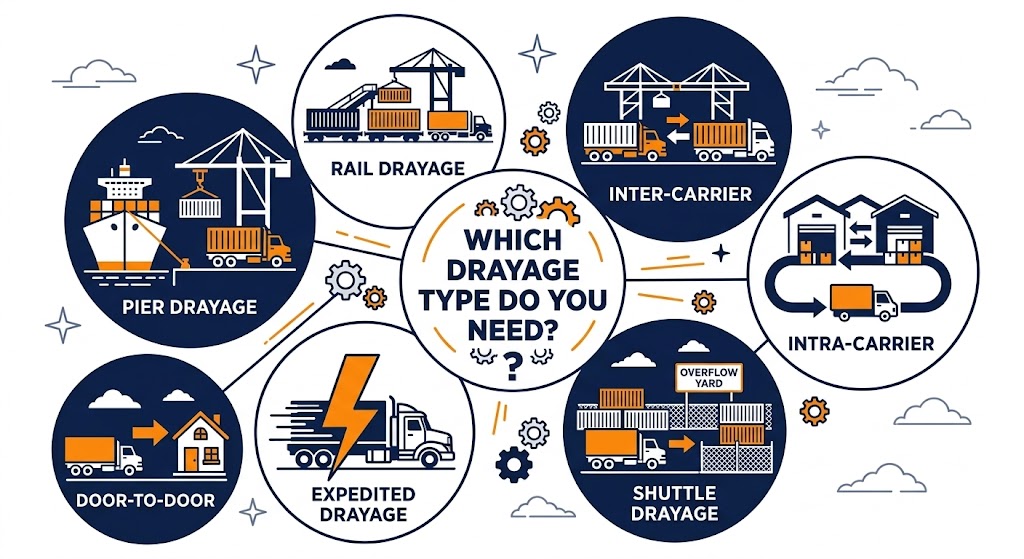
Classifications of Container Drayage Services
There is no one-size-fits-all approach to short-haul freight. Different logistics scenarios demand specific types of drayage to ensure goods are processed efficiently and port bottlenecks are avoided.
| Drayage Type | Operational Definition | Best Use Case |
| Pier (Port) Drayage | Transporting cargo containers directly from a seaport terminal to a local warehouse or rail ramp. | Evacuating imported goods rapidly from congested maritime facilities. |
| Rail Drayage | Moving containers between intermodal rail ramps and nearby distribution centers. | Bridging transcontinental railway freight networks with localized fulfillment nodes. |
| Inter-Carrier Drayage | Transferring containers between different transportation companies (e.g., trucking company to a rail line). | Executing multi-modal supply chain routing across various vendor networks. |
| Intra-Carrier Drayage | Moving containers between two different facilities owned by the exact same logistics provider. | Optimizing asset positioning purely under a single carrier’s operational umbrella. |
| Shuttle Drayage | Moving containers to temporary overflow yards when primary terminals reach maximum capacity. | Acting as a critical relief valve during peak shipping seasons or vessel early arrivals. |
| Expedited Drayage | Premium, accelerated short-haul service designed for highly time-sensitive freight. | Ensuring critical manufacturing components do not experience supply chain failure. |
| Door-to-Door Drayage | Direct delivery of a container from the port straight to the end customer’s final receiving facility. | Eliminating intermediate handling steps and maintaining total control over the freight. |
Need a drayage rate for your shipment?
*Reply within 2 hours. All-inclusive rate—no hidden accessorials.
The Financial Architecture: Navigating Accessorial Fees
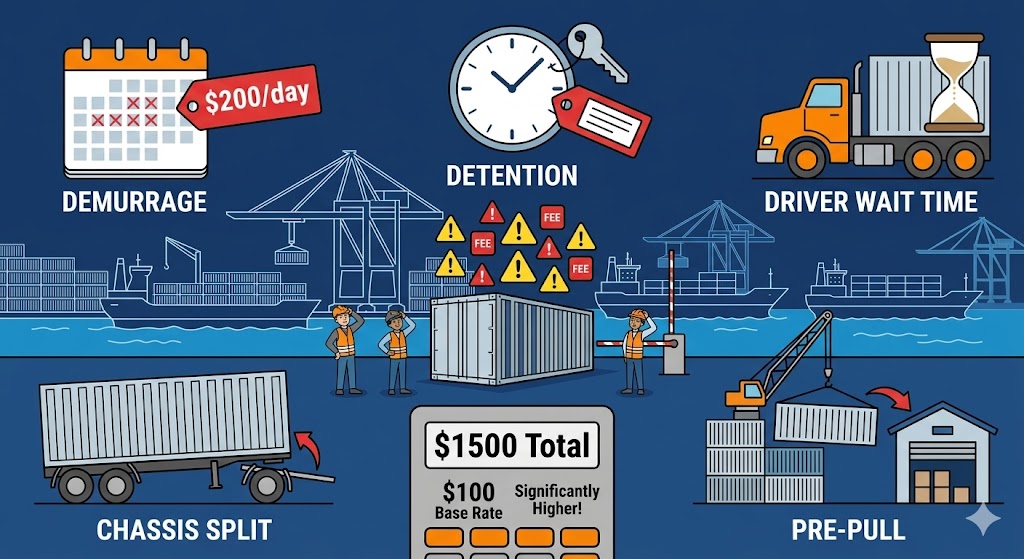
Budgeting based only on the base rate is a costly mistake. The true cost of drayage includes accessorial charges, congestion costs, chassis issues, waiting time, and free-time risks. These costs often connect directly with demurrage and detention charges, especially when containers are not picked up, unloaded, or returned within the allowed time.
Regulatory oversight on billing is tightening. The Federal Maritime Commission provides official guidance on detention and demurrage, and importers should understand how free time, terminal delays, and billing rules affect container pickup and return.
| Hidden Fee Type | Mechanism & Trigger | Estimated Financial Impact |
| Demurrage | Punitive charge assessed when a loaded container is left at the port beyond the allotted “free time”. | $200+ per day, compounding over time. |
| Detention (Per Diem) | Fee levied when a shipper holds the container/chassis outside of the port facility beyond the allowed free time. | Functions as a daily equipment rental penalty. |
| Driver Wait Time | Hourly charges incurred when a drayage driver is delayed at a congested terminal or warehouse (first 1-2 hours free). | $60 to $200 per hour. |
| Chassis Split Fee | Triggered when the chassis is not located at the same facility as the container, requiring an extra trip. | $150 to $300 per occurrence. |
| Pre-Pull Fee | Assessed when a carrier retrieves a container to avoid demurrage but must store it at their yard overnight. | $150 per pickup/delivery occurrence. |
Chassis splits commonly occur when a carrier’s chassis pool is depleted at the port, forcing the driver to retrieve equipment from a separate depot.
Real-World Cost Snapshot: LA Port to Inland Empire Warehouse
| Fee Type | Amount | Notes |
| Base Drayage | $450 | 45-mile haul |
| Chassis Split | $175 | Chassis at separate lot |
| Driver Wait Time | $120 | 2 hours at congested terminal |
| Total | $745 | 65% above base rate |
This is a typical bill for a single container during peak season.
Note: Most terminals grant 1–2 hours of free wait time. Beyond that, drivers bill in 15-minute increments.
Here’s your drayage playbook for 2026—six actions that directly reduce costs and protect your supply chain:
| What You Should Do | Why It Matters |
| Budget for accessorials, not just base rate | 20–30% of your drayage cost is hidden in fees |
| Ask your provider about Street Turn opportunities | Cut costs by 20–30% and reduce carbon footprint |
| Verify overweight corridor access for heavy loads | Ship 15–20% fewer containers overall |
| Use blind shipping when protecting supplier relationships | Safeguard your sourcing advantage |
| Monitor CARB compliance for California-bound freight | Avoid capacity shortages as older trucks retire |
| Leverage Peel-Off or Pop-Up Yard programs | Bypass gate queues to cut turnaround time by up to 50% |
Unique Market Insights: Advanced Drayage Execution
Leading supply chain managers deploy advanced tactics that go beyond standard dispatching to cut costs and improve speed. Here are unique strategies actively reshaping container drayage services.
Strategy 1: The Street Turn (Matchback) Advantage
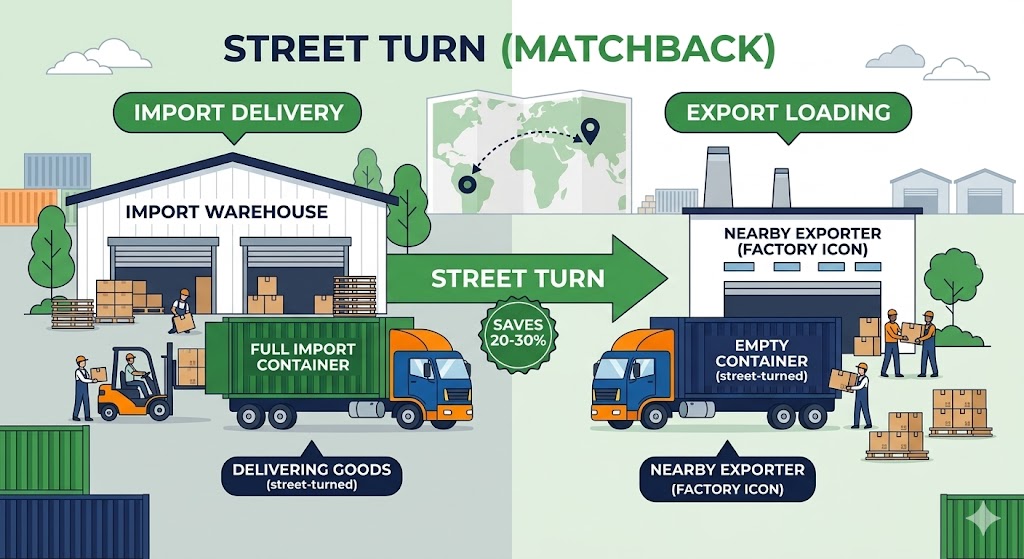
Traditionally, a driver drops off an import container and returns an empty box to the port, creating wasted “dead-head” miles. A “street turn” matches an emptied import container directly with a nearby exporter who needs an empty box to load their outgoing freight.
- Unique Benefit: This strategy reduces total transportation costs by 20% to 30%, increases loaded truck ratios to over 80%, and cuts carbon emissions by up to 40% by keeping trucks off the road longer.
Emerging Tactic: Peel-Off and Pop-Up Yards
To combat extreme congestion, some terminals now offer “peel-off” programs—designated lanes where pre-cleared containers are rapidly extracted from the port and staged at nearby “pop-up” overflow yards. This bypasses the main gate queue entirely and can cut total drayage turnaround time by 50%.
Strategy 2: Leveraging Overweight Corridors
Standard commercial trucks are restricted to a maximum of 80,000 pounds gross vehicle weight under Federal Highway Administration guidelines. However, specialized overweight corridors near massive hubs like the Port of Los Angeles allow permitted drayage carriers to haul up to 95,000 pounds legally using tri-axle chassis.
- Unique Benefit: By maxing out container weight, importers can reduce the total volume of containers shipped internationally by 15% to 20%, slashing overall ocean freight and drayage spend.
Drayage planning should also match the overall route design. If you are deciding between West Coast, inland rail, East Coast, or alternative port routing, review our shipping routes from China to USA guide before choosing a port only based on ocean freight cost.
Strategy 3: Information Security: Blind and Double-Blind Drayage
For distributors protecting supplier relationships, information security is critical. Blind shipping hides the supplier’s identity from the buyer. Double-blind shipments take this further, hiding the supplier from the buyer and the buyer from the supplier.
| Security Level | Consignee (Buyer) Visibility | Shipper (Supplier) Visibility | Operational Complexity |
| Standard | Full visibility. | Full visibility. | Low. |
| Blind | Cannot see supplier details. | Knows the buyer’s identity. | Moderate (swapping BOL). |
| Double-Blind | Cannot see supplier details. | Cannot see the final buyer. | High (requires multiple BOLs). |
Want to Implement Street Turns or Overweight Corridors?
Our drayage specialists can audit your current routing and identify 15–30% in savings using advanced tactics.
*Free savings analysis. We’ll reply with a customized report within 2 hours.
Conclusion
Mastering container drayage services is no longer a localized afterthought; it is a critical driver of global supply chain efficiency. Drayage acts as the indispensable bridge between macro-level ocean shipping and micro-level domestic distribution. By understanding how to navigate accessorial charges, leveraging advanced tactics like street turns and overweight corridors, and adapting to AI integration and environmental regulations, shippers can transform drayage from a volatile cost center into a reliable competitive advantage. Securing predictable, high-quality drayage capacity in 2026 is the ultimate key to maintaining resilient, cost-effective logistics operations, especially for high-volume routes such as(Shipping from China to USA).
Secure Predictable Drayage Capacity for 2026
Don’t let port congestion or hidden fees erode your margins. Let’s build a reliable drayage plan for your supply chain.
*Response within 2 hours. No obligation.