What is DDU / DAP shipping? DDU is an outdated trade term that was officially replaced by DAP (Delivered at Place). Under DAP, the seller delivers the goods to the named destination, but the buyer remains primarily responsible for import customs clearance, paying duties and taxes, and managing related border risks. For most buyers, the practical meaning of DAP is simple: the seller handles the freight, but the buyer must be fully prepared to handle the border and calculate the true landed cost.
Quick Answer
If you are trying to understand the core responsibilities of a DAP (formerly DDU) shipping agreement at a glance, here is how the roles break down between the buyer and the seller.
| Question | Short Answer |
|---|---|
| What does DAP stand for? | Delivered at Place. |
| What does DDU stand for? | Delivered Duty Unpaid (a legacy term replaced by DAP). |
| Who handles the main freight? | The seller books and pays for the transport. |
| Who handles import customs? | The buyer is legally and financially responsible. |
| Who pays duties and taxes? | The buyer pays their local government. |
| When does risk transfer? | Risk transfers to the buyer when goods are ready for unloading at the named place. |
Quick Decision: Is DAP the Right Choice?
| If your situation is… | DAP is usually… | Why |
|---|---|---|
| Experienced importer with broker | A strong fit | You already control customs and duty payment |
| First-time importer | Usually risky | Customs and tax handling can become overwhelming |
| Amazon FBA shipment | Often a poor fit | Amazon will not act as importer of record |
| Buyer wants full customs control | A good fit | Buyer controls declaration and broker choice |
| Buyer wants one predictable all-in price | Usually not ideal | DAP excludes duties, taxes, and broker costs |
What Is the Difference Between DDU and DAP?
When entering the world of international trade, you will frequently hear both buyers and suppliers use the terms DDU and DAP interchangeably. However, to understand the ddu vs dap comparison, you must look at the history of global trade frameworks. If you are comparing DAP with other common trade terms, our FOB, CIF, EXW, DAP, and DDP guide gives a broader side-by-side explanation.
The term DDU (Delivered Duty Unpaid) is a legacy term. The ddu meaning in shipping was officially retired over a decade ago. In 2010, the International Chamber of Commerce updated the ICC Incoterms rules and removed DDU, replacing it with DAP (Delivered at Place).
So, what is the difference today? Legally, DAP is the modern, enforceable standard that should be written into your commercial contracts. Operationally, the two terms mean the exact same thing: the seller gets the goods to your location, but the buyer is on the hook for the border taxes and clearance.
Even though DDU is technically obsolete, you will still hear what is ddu shipping discussed in warehouses and logistics meetings simply out of industry habit. Many veteran suppliers still write “DDU” on their proforma invoices. While understandable, it is always safer and more accurate to insist on using “DAP” in all formal documentation.
What Does DAP Shipping Mean in Practice?
To grasp the dap shipping meaning, you must understand the concept of a shared supply chain. DAP represents a middle ground where both the seller and the buyer have heavy, distinct responsibilities.
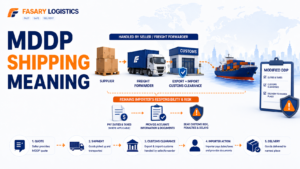
Under DAP terms, the seller takes on the burden of manufacturing the goods, packing them, loading them, managing export customs in the origin country, and paying for the international ocean, air, or rail freight. The seller must also arrange the transport to bring the goods directly to a “named place” in the destination country—usually the buyer’s warehouse or an agreed-upon terminal.
Under DAP, the seller continues to arrange the transport to the named destination, but the buyer must complete the import customs process and pay the required duties and taxes before the goods can move through the border smoothly. If the buyer fails to secure clearance or refuses to pay the required border taxes, the shipment will freeze, and the seller is not obligated to fix the problem.
| Shipping Stage | Seller Responsibility Under DAP? | Buyer Responsibility Under DAP? | Notes |
|---|---|---|---|
| Origin Handling | Yes | No | Seller moves goods from factory to port. |
| Export Clearance | Yes | No | Seller handles origin government paperwork. |
| Main Freight | Yes | No | Seller pays the airline or ocean carrier. |
| Import Clearance | No | Yes | Buyer must hire an import broker. |
| Import Duties & Taxes | No | Yes | Buyer pays all border levies directly. |
| Final Delivery | Yes | No | Seller’s carrier drives to the named place. |
| Unloading at Destination | No | Yes | Buyer must physically unload the truck. |
Who Pays What Under DAP?
Clarity regarding financial roles prevents disputes and supply chain delays. When asking who pays customs under dap, it is vital to draw a hard line between the cost of transportation and the cost of government compliance.
The seller pays for all logistical movements leading up to the final destination. The buyer pays for everything required to legalize the goods in their home country, plus the labor required to unload the goods upon arrival. For buyers who are not sure how border charges are different from each other, our import duty vs tariff vs tax guide explains the cost categories more clearly.
| Cost or Responsibility | Seller | Buyer | Notes |
|---|---|---|---|
| Product Cost & Origin Fees | Absorbs/Charges | Pays Seller | Buyer pays the commercial invoice. |
| Ocean or Air Freight | Pays Carrier | None | Seller covers the main transit costs. |
| Customs Brokerage Fees | None | Pays Broker | Buyer hires and pays a local customs agent. |
| Duties, Tariffs, and Taxes | None | Pays Customs | Buyer absorbs all government border fees. |
| Unloading Labor/Equipment | None | Pays Local Staff | Buyer must have a forklift or staff ready. |
DAP vs DDP: What Is the Real Difference?
The most common decision an importer must make is choosing between DAP and DDP. This dap vs ddp comparison is critical because it dictates how much administrative work the buyer must do.
As established, DAP stands for Delivered at Place. The seller transports the goods, but the buyer must clear customs and pay the duties.
DDP stands for Delivered Duty Paid. Under DDP, the seller acts as a full-service logistics provider. The seller not only pays for the freight, but they also take on the responsibility of clearing the goods through the destination country’s border and paying the import duties and taxes out of their own pocket (which is factored into the upfront price they charge the buyer).
To understand the difference fully, you can review our dedicated guide explaining what is DDP shipping.
| Factor | DAP (Delivered at Place) | DDP (Delivered Duty Paid) |
|---|---|---|
| Who handles the main freight? | Seller | Seller |
| Who handles export customs? | Seller | Seller |
| Who handles import customs? | Buyer | Seller |
| Who pays duties and taxes? | Buyer | Seller |
| Best for… | Importers who want customs control | Importers who want maximum convenience |
Why DAP Can Look Cheaper Than It Really Is
When reviewing a freight quote from a supplier, a DAP price will almost always look significantly lower than a DDP price. However, buyers must realize that a DAP quote is essentially an incomplete picture of your total landed cost. DDP can also have conditional costs if the scope is unclear, so when comparing both models, it is worth reviewing our guide to hidden fees in DDP shipping from China to USA.
Because the seller is not responsible for the destination taxes, they do not include those numbers in your invoice. Many novice buyers assume the DAP price is their final cost, only to experience severe “sticker shock” when their local customs broker sends them a massive bill for import tariffs.
Furthermore, does dap include customs clearance? Absolutely not. You must pay a licensed customs broker to file the paperwork on your behalf. This is a separate, out-of-pocket expense that the seller’s DAP quote will completely ignore.
Finally, delay risk under DAP stays with the buyer. If the buyer is slow to pay their taxes, or if they lack the proper import licenses, the cargo will sit at a destination terminal. The ports and carriers will begin charging daily demurrage and detention fees. Because the delay is caused by the buyer’s failure to clear customs, the buyer is financially responsible for these punishing storage charges.
Common Risks Buyers Underestimate Under DAP
The buyer risks under dap are primarily related to preparation and compliance. When the goods arrive, the clock starts ticking. If you are not prepared to receive them legally, the costs multiply rapidly.
If you are importing goods regulated by U.S. Customs and Border Protection or the Canada Border Services Agency, you must ensure you have the proper bonds, tax IDs, and product certificates ready long before the vessel arrives. For U.S.-bound shipments, our customs clearance from China to USA guide explains the clearance workflow, document requirements, and common delay points in more detail.
| Risk | Why It Happens Under DAP | Why It Matters |
|---|---|---|
| Sticker Shock | Duties and taxes are excluded from the seller’s initial quote. | Your profit margin disappears when the government tax bill arrives. |
| Customs Rejection | The buyer lacks proper import licenses or a registered tax ID. | The cargo cannot legally enter the country and may be seized or destroyed. |
| Storage Fees (Demurrage) | The buyer takes too long to clear customs, leaving the box at the port. | Terminal storage fees can reach hundreds of dollars per day. |
| Delivery Pauses | Final trucking stops because the border status is pending. | Your inventory pipeline breaks down, causing warehouse stockouts. |
When DAP Makes Sense
Despite the risks, what is dap shipping best utilized for? DAP is actually a highly effective and preferred commercial arrangement for many businesses.
DAP makes perfect sense for experienced commercial buyers who already have an established customs clearance setup. If you have a trusted customs broker on retainer and you hold an annual continuous import bond, you can clear goods quickly and efficiently on your own.
Furthermore, DAP gives the buyer absolute control and transparency over their customs declarations. Because you are paying the taxes directly to the government, you know exactly what is being declared, ensuring total legal compliance. Some buyers prefer this control over letting a foreign supplier handle their tax matters.
When DAP Is Not the Best Fit
DAP is generally a poor fit for individuals, first-time importers, or very small eCommerce sellers who lack supply chain infrastructure.
If you do not have a relationship with a customs broker, or if you do not want to deal with the administrative headache of calculating Harmonized Tariff Schedule (HTS) codes, DAP will feel overwhelming. If your primary goal is to have a single, predictable, upfront landed cost without any surprise bills from local authorities, relying on a DAP arrangement will only create frustration. In these scenarios, shifting the burden entirely to the seller via DDP is usually the smarter operational choice.
How to Evaluate a DAP Quote Correctly
Before signing a commercial agreement with a supplier under DAP terms, use this step-by-step logic to ensure you are fully protected and prepared for the shipment.
- Confirm the named delivery place: Ensure the contract specifically states your exact warehouse address (e.g., “DAP, 123 Main St, Dallas, TX”), not just a broad city name.
- Confirm what the seller covers before arrival: Verify that the seller is handling origin trucking, export documentation, and the main ocean or air freight. If your shipment is from China to the United States, our shipping quote from China to USA guide explains what should be included before you compare DAP, DDP, and other quote types.
- Confirm who handles import customs: Acknowledge in writing that you (the buyer) will appoint and pay the customs broker.
- Confirm who pays duties and taxes: Budget separately for the tariffs your government will charge, knowing the seller’s quote excludes this amount.
- Confirm broker readiness: Engage your customs broker weeks before the shipment arrives to pre-file any necessary entry paperwork.
- Check delay-related risk: Understand who pays for truck waiting time or port storage if your customs clearance is delayed by a random government exam.
- Compare DAP with DDP only on equal scope: When comparing a DAP quote against a DDP quote, you must manually calculate and add your estimated import taxes to the DAP quote to make a fair, apples-to-apples comparison.
FAQ
What is DDU shipping?
DDU (Delivered Duty Unpaid) is a legacy international trade term where the seller delivers the goods to the buyer but does not pay the import duties. The International Chamber of Commerce officially replaced DDU with DAP in 2010.
What is DAP shipping?
DAP (Delivered at Place) is an Incoterm meaning the seller is responsible for all costs and risks associated with delivering the goods to a named destination, but the buyer is responsible for import customs, duties, and taxes.
Is DDU the same as DAP?
Operationally, yes. Both terms mean the seller handles the freight and the buyer handles the customs and duties. However, DDU is an outdated term that is no longer officially recognized in modern ICC rulebooks, whereas DAP is the current legal standard.
Does DAP include customs clearance?
No. One of the most common misunderstandings is whether DAP includes customs clearance. It does not. The buyer must hire their own customs broker and manage the import clearance process entirely.
Does DAP include duties and taxes?
No. The defining feature of DAP is that does dap include duties is strictly false. The buyer must pay all local tariffs, VAT, and border taxes directly to their government.
What is the difference between DAP and DDP?
Under DAP, the buyer clears customs and pays duties. Under DDP (Delivered Duty Paid), the seller clears customs and pays duties. DDP places the maximum responsibility on the seller, while DAP splits the responsibility at the destination border.
Is DAP good for first-time importers?
Usually not. DAP requires the buyer to navigate government customs regulations, hire brokers, and pay sudden tax bills. First-time importers generally prefer DDP for its simplicity and all-inclusive pricing structure.
What happens if the buyer is not ready for customs clearance under DAP?
If the buyer is not ready with a customs broker, tax ID, import documents, or duty payment, the shipment can be delayed at the destination terminal. In that situation, the buyer may face storage, demurrage, detention, or delivery delay costs.
Why can DAP become expensive at destination?
If the buyer is not prepared to clear customs quickly, the cargo will sit at the port or airport. The resulting storage fees (demurrage and detention) can add hundreds of dollars a day to the final cost, all of which the buyer must pay under DAP.
Conclusion: DAP Gives the Buyer More Control, but Also More Border Responsibility
DAP works well for experienced importers who already understand customs clearance, duty payment, and broker coordination. For buyers without that infrastructure, DAP often looks cheaper at the quote stage but becomes more complicated and more expensive once the shipment reaches the border.
Learn More About DDP and Route-Specific Shipping
Understanding the difference between DAP and DDP is essential for calculating your true landed cost and avoiding surprise bills from local authorities. DAP provides excellent control for experienced importers, but it requires diligent preparation.
If you realize that DAP requires more administrative work than your business is ready for, explore our glossary on what is DDP shipping to see how you can simplify your logistics.
Alternatively, if you already know your preferred shipping terms and want to understand how these concepts apply to real-world transit times and regional regulations, you can review our guides on shipping from China to USA, shipping from China to Canada, or shipping from Vietnam to USA to plan your next commercial move.