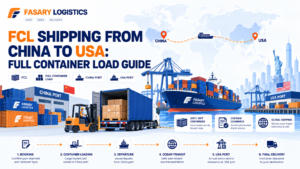
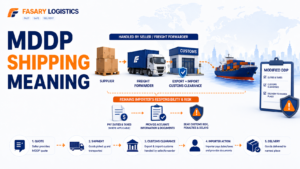
Sea freight from China to Canada is the practical choice for planned inventory, bulky or heavy cargo, warehouse and Amazon replenishment, and regular commercial shipments when unit cost matters more than speed. Ocean transit runs about 14–22 days to Vancouver and 25–40 days to Toronto or Montreal door-to-door, with FCL ocean rates from about $1,900 (20GP) and LCL from $65–$90/CBM to Vancouver. In our experience, the ocean leg is rarely where China-to-Canada shipments get delayed — it is the inland rail, customs release, and final delivery that decide the real timeline. Below is how to choose LCL vs FCL, pick the right port and container, and avoid the destination fees that catch importers off guard.
The right ocean plan depends on CBM, gross weight, LCL/FCL choice, container size, China origin, Canadian destination, customs documents, quote scope, and final delivery plan. For the wider method comparison, see shipping from China to Canada.
Quick Answer: Is Sea Freight the Right Choice?
| Situation | Is sea freight a good fit? | Why | What to check |
|---|---|---|---|
| High-volume planned inventory | Usually yes | Lower unit transport cost than air | CBM, container option, and destination plan |
| Heavy or bulky cargo | Usually yes | Ocean freight handles size and weight better | LCL/FCL, loading method, and final delivery |
| Urgent replenishment | Usually no | Ocean transit is slower than air | Delivery deadline and inventory buffer |
| Low-margin retail stock | Often yes | Unit cost matters more than speed | Quote scope and destination charges |
| Small commercial shipment | Depends | LCL may work, but fees matter | Total CBM and CFS charges |
| Amazon or warehouse replenishment | Yes if planned early | Works well for palletized or containerized inventory | Labels, appointment, and delivery rules |
Ocean freight is usually stronger for planned shipments where unit cost matters more than speed. It is especially useful when cargo is too large or too heavy for practical air freight.
If the cargo is urgent, very small, or high-value, compare air freight from China to Canada separately instead of forcing everything into ocean routing.
Need Sea Freight to Canada?
Send us your supplier city, cargo size, gross weight, CBM, Canadian postal code, and delivery deadline. We’ll help check whether ocean freight is practical for your shipment.
*Fast response. No obligation.
LCL, FCL, 20GP, 40GP, and 40HQ: Which Option Fits?
The first sea freight decision is whether to ship by LCL or FCL. LCL means your cargo shares container space with other importers. FCL means your cargo moves in a dedicated container.
| Option | Best for | Main advantage | Main watchout |
|---|---|---|---|
| LCL | Smaller commercial shipments that do not fill a container | You pay for shared space instead of a full container | CFS handling and destination charges can add cost |
| FCL | Larger cargo, fragile cargo, or container-size shipments | Better control, less mixed handling, and lower unit cost at scale | Needs enough volume to justify the container |
LCL may work for smaller cargo, but CFS and destination charges matter. A low LCL ocean rate can become less attractive after destination handling, CFS release, customs support, and final delivery are added. As a 2026 reference, LCL from China to Canada typically runs about $65–$90/CBM to Vancouver and $125–$160/CBM to Toronto or Montreal before destination charges — for the full price breakdown, see shipping cost from China to Canada.
FCL may become more practical as volume increases, especially when handling risk, destination fees, or container control matter. The exact breakpoint depends on route, season, cargo type, and final delivery location. FCL ocean rates typically start around $1,900 for a 20GP to Vancouver and $3,900–$4,600 to Toronto or Montreal, with 40HQ roughly $2,450–$5,100 depending on lane.
| Container type | Best for | Main watchout |
|---|---|---|
| 20GP | Heavy, dense cargo such as tiles, metal parts, stone, or machinery | You may hit weight limits before filling all space |
| 40GP | General commercial cargo | Needs enough volume to justify the container |
| 40HQ | Light and bulky goods such as furniture, apparel, home goods, and large cartons | More space, but similar weight limits to 40GP |
For a more detailed loading comparison, see 20GP, 40GP, and 40HQ container sizes.
LCL, FCL, or Container?
Share your carton count, dimensions, gross weight, CBM, product type, pickup city, and Canadian destination. We’ll help compare LCL, 20GP, 40GP, and 40HQ options.
*Fast response. No obligation.
Main China Ports and Canada Gateways
The best origin port depends on supplier location, inland trucking, carrier schedule, vessel space, and cargo ready date.
| China origin port | Common supplier region | Practical note |
|---|---|---|
| Shanghai | East China, Jiangsu, Zhejiang | Large export coverage and frequent sailings |
| Ningbo | Zhejiang and nearby manufacturing areas | Strong option for general container exports |
| Shenzhen / Yantian | South China and Guangdong | Common for consumer goods, electronics, and Amazon cargo |
| Guangzhou / Nansha | Pearl River Delta | Useful for many South China suppliers |
| Qingdao | North China and Shandong | Often used for machinery and industrial goods |
| Xiamen | Fujian and nearby regions | Common for garments, shoes, and consumer products |
The closest port is not always the best port. Sometimes a slightly longer China-side truck move gives better space, routing, or sailing reliability.
On the Canada side, the gateway should be selected based on the final Canadian postal code, not only the port name.
| Canada gateway or destination | Typical routing logic | What to remember |
|---|---|---|
| Vancouver | Key West Coast gateway | Often practical for British Columbia and Western Canada |
| Prince Rupert | West Coast ocean-to-rail option | Can be useful for some inland rail routing |
| Toronto | Usually reached by rail or inland movement after port discharge | Inland timing and final delivery matter |
| Montreal | Often requires longer routing or rail planning | Final Quebec or Eastern Canada delivery should be checked |
| Calgary / Edmonton | Inland rail and truck destinations | Rail timing and final truck delivery affect total lead time |
For a deeper route comparison, see shipping routes from China to Canada.
Sea Freight Transit Time: Port-to-Port vs Door-to-Door
Transit time depends on origin port, Canadian gateway, rail connection, customs release, and final delivery location. Port-to-port time is not the same as door-to-door delivery.
| Route / delivery pattern | Typical time | What to remember |
|---|---|---|
| China to Vancouver / Prince Rupert | 14–22 days ocean to West Coast gateway | Usually one of the faster ocean arrival patterns |
| China to Toronto | 25–40 days: ocean to West Coast plus rail or inland movement | Longer than West Coast delivery |
| China to Montreal | 28–45 days: ocean plus rail or longer routing | Often longer than Toronto or Vancouver patterns |
| Door-to-door sea freight | Longer than port-to-port: pickup, export, vessel, customs, inland, appointment | Real delivery time is longer than port-to-port transit |
Door-to-door time includes factory pickup, export handling, vessel schedule, ocean transit, customs release, rail or truck movement, appointment, and final delivery. If your shipment has a fixed deadline, plan from cargo ready date to final delivery, not only from vessel departure.
For detailed timing ranges, see shipping time from China to Canada.
Sea Freight from China to Canada Quote Scope
A China-to-Canada sea freight quote should be compared by total scope, not only by the ocean base rate. Two quotes may look similar but include different services.
| Quote component | What it means | Why it matters |
|---|---|---|
| Ocean freight | Main carrier charge for the sea movement | Quoted per container for FCL or per CBM for LCL |
| Origin charges | China-side handling, documents, warehouse, or port charges | Depends on Incoterms and quote scope |
| Destination charges | Canada-side terminal, CFS, release, or handling fees | Especially important for LCL shipments |
| Customs brokerage | Customs entry and release support | Needed for most commercial imports |
| Duties / GST if applicable | Government charges based on product, value, and import setup | May be separate unless scope says otherwise |
| Inland delivery | Rail, drayage, trucking, or final-mile delivery | Can change total cost significantly |
| Appointment / liftgate / warehouse delivery if applicable | Special final delivery services | Important for warehouses, 3PLs, Amazon, and residential delivery |
| Quote scope | Port-to-port, door-to-door, DDP, DAP, or duty-unpaid | Determines what is included and excluded |
Compare quotes by the same scope. A port-to-port quote is not the same as door-to-door, DDP, DAP, or duty-unpaid service.
If you are preparing a quote request, review shipping quote from China to Canada. If cost is the main concern, compare the cheapest way to ship from China to Canada only after the service scope is clear. For Amazon-bound ocean cargo, FBA labels, appointment, and prep also affect the sea freight plan — see Amazon FBA shipping from China to Canada.
China-to-Canada Sea Freight Process
A normal ocean shipment can be simplified into six steps:
- Confirm cargo details. Product type, carton count, dimensions, gross weight, CBM, supplier address, and Canadian destination.
- Choose LCL, FCL, and container option. Compare shared-container, dedicated-container, and 20GP/40GP/40HQ logic.
- Book space and prepare export handling. Match the booking with cargo ready date and origin port.
- Cargo moves by vessel to Canada. The container or LCL shipment moves through the ocean leg.
- Canada customs and release are handled. Documents, broker support, and importer details should be ready before arrival.
- Cargo moves by rail, truck, CFS release, or final delivery depending on scope. Delivery may require appointment, dock, liftgate, or warehouse receiving preparation.
This process changes depending on LCL/FCL choice, destination region, customs setup, and delivery scope.
Customs Documents, Duties, and GST
Sea freight needs accurate customs documents, but this section is not a full customs guide.
| Document / item | Why it matters | What to confirm |
|---|---|---|
| Commercial invoice | Shows buyer, seller, product, value, and origin | Product description, value, currency, and terms |
| Packing list | Shows cartons, weights, dimensions, and packages | Carton count, gross weight, CBM, and package type |
| Bill of lading | Transport document and cargo receipt | Shipper, consignee, notify party, and B/L type |
| HS code | Supports duty and GST/HST review | Confirm with broker if unsure |
| Importer / consignee | Identifies responsible import and receiving parties | Correct company name, address, and contact details |
| Duties and GST/HST | May apply depending on goods and import setup | Confirm responsibility and payment process before arrival |
| Customs broker | Supports entry filing and release | Broker contact and required documents |
For detailed customs planning, use customs clearance from China to Canada. For duty and GST/HST calculation, see import duty from China to Canada. This is not legal or tax advice. Importers should confirm classification, duties, GST/HST, and importer responsibility with a broker or customs professional.
Destination Fees, Demurrage, Detention, and Delivery Risks
Sea freight can become expensive when containers are not cleared, picked up, unloaded, delivered, or returned on time.
| Risk | Why it happens | How to reduce risk |
|---|---|---|
| Demurrage | Container remains at terminal beyond free time | Prepare customs documents and payment before arrival |
| Detention | Container is not returned within allowed time | Plan unloading and return schedule early |
| Storage | Cargo waits at terminal, CFS, rail ramp, or warehouse | Confirm release and pickup process early |
| CFS handling | LCL cargo must be unloaded, sorted, and released | Ask for destination CFS charges before booking |
| Rail storage | Inland containers wait at rail ramp | Track rail arrival and arrange pickup quickly |
| Truck waiting time | Driver waits because warehouse is not ready | Confirm receiving hours and appointment rules |
| Warehouse appointment delay | Delivery cannot be completed on schedule | Book appointment before cargo is ready for delivery |
| Late customs documents | Clearance cannot proceed smoothly | Prepare invoice, packing list, B/L, and HS code before arrival |
For container time-related fees, see demurrage and detention charges. For port trucking context, see drayage in shipping.
Peak Season and Inland Planning
For Toronto or inland Canada shipments, ocean arrival may not be the biggest risk. During peak season, rail availability, terminal congestion, customs release, and warehouse receiving can affect final delivery more than the vessel transit itself. A safer plan compares gateway, rail movement, and delivery appointment before booking.
In our experience with China-to-Canada ocean shipments, peak-season delays are usually not on the water — they happen at the rail ramp, the terminal, or the warehouse appointment. A shipment that sails on time can still miss its delivery window if inland rail space or the receiving appointment isn’t locked in early, which is why we plan Toronto and inland shipments around gateway + rail + appointment, not just vessel transit.
Common Mistakes When Shipping by Sea
| Mistake | What goes wrong | Better approach |
|---|---|---|
| Choosing only by ocean base rate | Destination, inland, and delivery fees change the final result | Compare total quote scope |
| Using LCL near the FCL breakpoint without comparison | LCL handling fees may reduce savings | Compare FCL when volume is close |
| Choosing the wrong container size | You pay for unused space or hit weight limits | Match cargo density to 20GP, 40GP, or 40HQ |
| Ignoring inland rail or final delivery time | Toronto, Montreal, or inland delivery takes longer than port arrival | Plan by door-to-door timeline |
| Preparing customs documents late | Clearance delays can create storage charges | Prepare invoice, packing list, and HS code before departure |
| Confusing port-to-port with door-to-door | Port arrival does not mean delivered | Ask for the full delivery timeline and scope |
Most sea freight issues come from comparing incomplete quotes or planning only around the ocean leg.
What Information Should You Send for a Sea Freight Quote?
A useful quote needs accurate cargo, origin, destination, and scope details.
| Information needed | Example | Why it matters |
|---|---|---|
| Pickup city in China | Shanghai, Ningbo, Shenzhen, Qingdao | Helps identify origin port and pickup route |
| Supplier address | Full factory or warehouse address | Needed for EXW pickup and trucking plan |
| Cargo ready date | May 20 | Helps match vessel schedule and quote validity |
| Product type | Furniture, machinery parts, home goods | Helps identify handling or customs questions |
| Carton count | 200 cartons | Needed for warehouse and loading planning |
| Carton dimensions | 60 × 40 × 35 cm | Used to calculate CBM |
| Gross weight | 8,500 kg | Helps compare container and delivery options |
| Total CBM | 28 CBM | Main basis for LCL vs FCL decision |
| Container preference if any | LCL / 20GP / 40GP / 40HQ | Helps narrow quote options |
| Canadian destination city / postal code | Toronto M5V / Vancouver V6B | Needed for inland delivery |
| Delivery address type | Commercial / Amazon FBA / 3PL / residential | Affects truck, appointment, and delivery scope |
| Amazon FBA / 3PL / warehouse if applicable | Assigned FC or warehouse address | Helps plan final delivery requirements |
| Preferred scope | Port-to-port / door-to-door / DDP / DAP / duty-unpaid | Defines what is included and excluded |
| Delivery deadline | Before June 30 | Helps check whether ocean freight is realistic |
Ready for a Sea Freight Quote?
Send your supplier address, cargo ready date, carton details, gross weight, CBM, product type, Canadian postal code, delivery address type, and preferred quote scope.
*Fast response. No obligation.
How Fasary Logistics Helps with China-to-Canada Sea Freight
Fasary Logistics is a Shenzhen-based freight forwarder established in 2015. We help importers review ocean shipment details before booking, so the route and quote scope match the real cargo and final delivery needs. We coordinate sea freight from Shanghai, Ningbo, Shenzhen, Guangzhou, Qingdao, and Xiamen to Vancouver, Prince Rupert, Toronto, Montreal, Calgary, and Edmonton.
| What you send | What Fasary checks | Why it matters |
|---|---|---|
| CBM and gross weight | Cargo volume, density, and shipment size | Helps compare LCL, FCL, and container options |
| Carton dimensions and cargo type | Loading and handling logic | Helps reduce method mismatch |
| Supplier city and pickup address | Origin port and pickup route | Helps compare practical China-side gateways |
| Canadian postal code and delivery type | Canada gateway, inland route, and final delivery risk | Helps avoid planning only by port name |
| Preferred quote scope | Port-to-port, door-to-door, DDP, DAP, or duty-unpaid | Helps compare quotes on the same basis |
| Customs document readiness | Invoice, packing list, B/L, HS code, and broker details | Helps prepare cleaner documents before arrival |
Fasary Logistics does not guarantee cheapest cost, fastest routing, customs clearance, duties/GST/HST amount, delivery date, port availability, rail space, or exact final cost before cargo details are confirmed.
FAQ
How long does sea freight from China to Canada take?
West Coast ocean arrival is usually 14–22 days to Vancouver, while inland or Eastern Canada delivery runs 25–40 days door-to-door. Full door-to-door lead time also includes pickup, export handling, customs release, rail, trucking, appointment, and final delivery.
Is FCL or LCL better for China-to-Canada ocean shipments?
LCL is usually better for smaller shipments that do not justify a full container. FCL is usually better for larger shipments, fragile cargo, or cargo that benefits from fewer handling steps.
What is the difference between FCL and LCL?
FCL means your goods move in a dedicated container. LCL means your goods share container space with other importers. FCL gives more control, while LCL is more practical for smaller volumes.
Which container should I use?
A 20GP is often better for heavy dense cargo. A 40GP fits general commercial cargo. A 40HQ is usually better for light and bulky goods because it offers more internal volume.
What documents are needed for sea freight to Canada?
Common documents include commercial invoice, packing list, bill of lading, HS code, importer or consignee information, and customs broker details. Some products may need additional certificates.
Does DDP work for sea freight from China to Canada?
Yes. DDP shipping from China to Canada can be used when the provider handles ocean freight, customs coordination, duties/taxes, and final delivery under a written scope. Confirm inclusions and exclusions before booking.
Why can LCL be more expensive than expected?
LCL can look inexpensive because ocean freight is shared. However, destination CFS, deconsolidation, warehouse, customs, and delivery charges can increase the final cost.
Conclusion
Sea freight from China to Canada is usually best for planned, bulky, heavy, or regular commercial cargo where unit cost matters more than speed.
The right plan depends on LCL/FCL choice, container size, origin port, Canadian gateway, customs documents, destination charges, and final delivery scope. A low ocean base rate is not enough if the destination and delivery costs are unclear.
Fasary Logistics, established in 2015, helps importers separate the ocean rate from the destination and inland costs that decide the real total — so the sea freight quote reflects the actual shipment, not just the cheapest-looking base rate. Send us your supplier city, cargo ready date, carton details, gross weight, CBM, Canadian postal code, delivery address type, and quote scope, and we’ll check the practical sea freight options before you book.