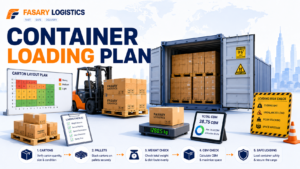
A container loading plan shows how cartons, pallets, crates, machines, or mixed cargo should be arranged inside a shipping container before ocean freight booking or loading.
Importers should care because a weak loading plan can cause wasted container space, wrong container choice, overweight risk, cargo damage, unstable stacking, quote changes, warehouse delays, or final delivery problems.
A good plan should connect sea freight container sizes, CBM, carton/pallet data, gross weight, loading method, and final delivery needs before booking. A CBM calculator can help estimate volume, but CBM alone is not a full loading plan.
Quick Answer: What Should a Container Loading Plan Include?
| Loading item | What to prepare | Why it matters |
|---|---|---|
| Cargo dimensions | Carton, pallet, crate, or machine size | Determines space usage. |
| Gross weight | Per carton, pallet, crate, or total shipment | Affects container choice and safety. |
| CBM | Total volume | Helps compare LCL vs FCL. |
| Loading method | Loose cartons, pallets, crates, or mixed cargo | Affects capacity and handling. |
| Container type | 20GP, 40GP, 40HQ, or special equipment | Matches volume and weight. |
| Loading evidence | Photos, seal number, packing list, loading record | Helps reduce disputes and claim risk. |
What Is a Container Loading Plan?
A container loading plan is a practical plan for how goods will be packed into a container. It may include carton layout, pallet position, crate placement, loading sequence, heavy cargo position, fragile cargo protection, and weight distribution.
It is useful before FCL booking, but also helpful when deciding between LCL, FCL, pallets, loose cartons, or split shipment. For broader service context, see ocean freight and sea shipping from China to USA.
The IMO/ILO/UNECE CTU Code provides global guidance for safe packing and securing of cargo transport units. This article is a practical importer planning guide, not a legal or engineering cargo-securing manual.
Cargo Data Needed Before Loading
Before planning container loading, collect:
- product name
- carton count
- carton dimensions
- gross weight per carton
- total gross weight
- CBM
- pallet count if palletized
- pallet dimensions and gross weight per pallet
- crate or machine dimensions if applicable
- stackability
- fragile, heavy, liquid, battery, magnetic, or dangerous goods notes
- loading address
- destination country
- final delivery address type
- delivery deadline if any
For quote preparation, use a clear shipping quote from China to USA based on final packed cargo data, not only supplier estimates.
Loose Cartons vs Palletized Loading
| Loading style | Advantage | Risk or trade-off |
|---|---|---|
| Loose cartons | Better space usage in many cases | More handling and harder unloading. |
| Palletized cargo | Easier handling and warehouse receiving | May reduce container space efficiency. |
| Crated cargo | Better protection for machines or fragile goods | Larger dimensions and higher weight. |
| Mixed loading | Flexible for several suppliers or SKUs | Needs careful sequence and separation. |
Loose carton loading may fit more cargo, but it can increase handling time and damage risk. Pallets help warehouse handling, LTL/FTL delivery, Amazon FBA, and 3PL receiving, but they usually use more space than loose cartons.
Importers should compare container space with final delivery needs. For pallet planning, review standard pallet dimensions.
Loose or Palletized Loading?
Send carton count, carton size, gross weight, pallet details if any, stackability, and final delivery requirements before choosing loading method.
*Fast response. No obligation.
Choosing 20GP, 40GP, 40HQ, or Special Equipment
20GP may fit heavy cargo better because weight may reach practical or regulatory limits before volume. 40GP and 40HQ may fit lighter bulky cargo better. 40HQ is often useful for bulky cartons, furniture, lightweight products, or higher-volume cargo.
Do not choose container type only by CBM. Actual carton size, pallet footprint, gross weight, route, equipment availability, loading site conditions, destination unloading, and final delivery plan all matter.
For cost context, compare 20ft container shipping cost from China to USA and 40 ft container shipping cost from China to USA, but do not treat pricing articles as loading capacity guarantees.
Weight Distribution and Cargo Securing Risk
Cargo should not be planned only by volume. Heavy goods, fragile goods, uneven cargo, long cargo, and machinery need extra attention before loading.
Poor weight distribution can create handling, trucking, rail, and safety risks. Fragile goods should not be placed under heavy cargo. Cargo should be arranged and secured to reduce shifting during truck, rail, ocean, and terminal handling.
The UNECE CTU Code and TT Club CTU Packing Guidance are useful references for safe packing principles. For technical securing requirements, use qualified loading or cargo-securing professionals.
Container Loading for Furniture, Machinery, and Building Materials
Furniture may be bulky, scratch-sensitive, and fragile, so packaging and loading order matter. For a product-specific guide, see shipping furniture from China to USA.
Machinery may be heavy, crated, high-value, or require forklift loading. Importers should check dimensions, gross weight, crate strength, lifting access, and delivery site conditions. For more detail, see importing machinery to USA.
Building materials may be heavy, dense, fragile, dusty, or palletized. Long, oversized, or non-container-fit cargo may need a different plan, such as oversized cargo shipping. Products with batteries, liquids, chemicals, or dangerous goods need acceptance review before loading.
Loading Heavy or Fragile Cargo?
Share product photos, packaging details, crate or pallet data, gross weight, loading site conditions, and destination unloading requirements.
*Fast response. No obligation.
Loading Photos, Seal Number, and Document Checks
Importers should request loading evidence where appropriate: empty container photo if available, container number, seal number, photos before loading, photos during loading, photos after loading, final sealed container photo, packing list matched with loaded cargo, carton or pallet count check, and cargo condition before loading.
These records may help if there is shortage, damage, wrong loading, warehouse rejection, or cargo insurance discussion later. They do not guarantee claim approval, but they improve shipment visibility.
Need Loading Records?
We can help request container number, seal number, loading photos, packing list checks, and cargo condition records where applicable.
*Fast response. No obligation.
Common Container Loading Mistakes Importers Should Avoid
| Mistake | Why it causes problems | Better approach |
|---|---|---|
| Planning only by CBM | Weight, pallets, and loading limits may be ignored | Check volume and gross weight together. |
| Using estimated dimensions after production | Quote and loading plan may change | Confirm final packed data. |
| Assuming pallets fit like loose cartons | Pallets reduce usable space | Compare both methods. |
| Loading fragile cargo under heavy goods | Damage risk increases | Separate by weight and fragility. |
| Ignoring stackability | Space planning becomes wrong | Confirm whether cargo can be stacked. |
| Skipping loading photos and seal number | Dispute evidence becomes weaker | Request loading records. |
| Not checking forklift or loading ability | Loading may be delayed | Confirm site equipment. |
| Choosing FCL automatically | LCL or split shipment may be better | Compare by cargo data. |
What Fasary Can Help With Before Container Loading
Fasary can help importers collect carton, pallet, crate, and gross weight data from suppliers, compare LCL vs FCL and 20GP vs 40GP vs 40HQ options, coordinate supplier pickup or China warehouse loading, and help request loading photos and seal information where applicable.
Fasary can also connect the container loading plan with ocean freight quote scope, customs-related documents, and final delivery planning to Amazon FBA, 3PL, warehouse, or business destinations. Fasary’s value is not guaranteeing exact container utilization or eliminating all damage risk. The practical value is helping importers prepare cleaner cargo data, choose a realistic shipping plan, and reduce avoidable loading and delivery surprises before the container leaves China or Vietnam.
Plan Container Loading
We can help collect cargo data, compare LCL/FCL and container options, coordinate loading, and connect ocean freight with final delivery.
*Fast response. No obligation.
FAQ
What is a container loading plan?
A container loading plan shows how cartons, pallets, crates, machines, or mixed cargo should be arranged inside a shipping container. It helps importers plan space, weight, loading sequence, cargo protection, and delivery requirements before booking.
What data is needed for container loading?
You need product name, carton count, carton dimensions, gross weight, CBM, pallet or crate data if applicable, stackability, fragile or heavy cargo notes, loading address, destination, and final delivery requirements.
Is CBM enough to decide container size?
No. CBM is only one part of container loading calculation. Importers should also check gross weight, carton dimensions, pallet footprint, stackability, cargo shape, loading site conditions, route, and final delivery needs.
Should I ship loose cartons or pallets?
It depends on cargo type and delivery needs. Loose cartons may use space better, while pallets can make warehouse handling, LTL/FTL delivery, and 3PL or FBA receiving easier. Compare both before loading.
Why are loading photos important?
Loading photos can show cargo condition, carton or pallet count, loading sequence, container number, seal number, and final loaded condition. They may help if shortage, damage, rejection, or insurance discussion happens later.
Can Fasary help with container loading planning?
Yes. Fasary can help collect cargo data, compare LCL/FCL and container options, coordinate supplier or warehouse loading, request loading evidence where applicable, and connect ocean freight with final delivery planning.
Conclusion
A container loading plan connects cargo dimensions, gross weight, CBM, carton/pallet data, container type, loading sequence, securing risk, and final delivery needs.
Before booking, confirm carton count, dimensions, weight, stackability, pallet data, loading address, container type, loading photos, seal number, and destination requirements. Fasary can help prepare cargo data, compare LCL/FCL and container options, coordinate loading, and plan ocean freight and final delivery from China or Vietnam to the U.S. or Canada.