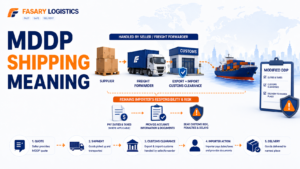
A customs broker helps importers with customs entry, document review, duty/tax coordination, and release communication when goods enter a destination. The broker supports customs work, but the importer remains responsible for accurate shipment information.
Missing invoice details, unclear HS codes, importer of record confusion, U.S. customs bond or ISF issues, and Canada CBSA or CARM-related requirements can cause delays or extra costs.
For U.S. shipments, see customs clearance from China to USA. For Canada shipments, start with shipping from China to Canada.
Quick Answer: What Does a Customs Broker Do for Importers?
| Question | Short answer | Importer note |
|---|---|---|
| What is a customs broker? | A licensed or authorized customs professional | Helps with entry, documents, duty/tax, and release steps. |
| When do importers need one? | Often for commercial cargo or formal entries | Confirm before departure. |
| Is a broker the same as a forwarder? | No | Roles can overlap, but they differ. |
| Is the broker the importer of record? | Not usually | Importer responsibility remains important. |
| Is it different in the U.S. and Canada? | Yes | Systems, bonds, and tax handling differ. |
| How do you choose one? | Check authorization, experience, fees, and communication | Confirm scope in writing. |
Need Import Details Checked?
Send your invoice, packing list, product details, HS code if available, cargo value, origin, destination country, and delivery address before shipping.
*Fast response. No obligation.
What Is a Customs Broker?
A customs broker is licensed or authorized to help importers transact customs-related business in the destination. In the U.S., CBP regulates brokers, and the official CBP customs brokers page explains broker licensing.
In practical terms, a customs broker may help with entry data, HS code review, duty/tax coordination, release updates, and communication with customs authorities. Importers must still provide accurate product, value, origin, and compliance information.
What Does a Customs Broker Do?
A customs broker may review the commercial invoice and packing list, support customs entry filing, review HS code information when in scope, coordinate duty and tax data, answer bond or security questions, support ISF details for U.S. ocean freight where applicable, and communicate release status. The exact service depends on country, product, entry type, and written service scope.
When Do Importers Need a Customs Broker?
Importers often use a customs broker for commercial cargo, formal customs entry, ocean freight, air freight, higher-value shipments, regulated products, Amazon FBA delivery, warehouse delivery, or first-time importing.
A broker may also be useful when HS code, origin, value, duty, tax, importer responsibility, or product admissibility is unclear. Not every shipment requires a broker, but customs mistakes can cause delays, exams, storage, or compliance issues.
For U.S. imports, customs bond and ISF may matter depending on shipment type. For Canada imports, CBSA, GST/HST, duty, and CARM/RPP-related requirements may matter. Confirm with the appropriate licensed customs broker.
Customs Broker vs Freight Forwarder vs Importer of Record
| Role | Main job | What importers should know |
|---|---|---|
| Freight forwarder | Coordinates transportation | Handles pickup, freight, routing, delivery, and quotes. |
| Customs broker | Handles customs entry work | Supports filing, release, and compliance-related steps. |
| Importer of record | Legal party responsible for import information | Responsible for product, value, origin, and compliance details. |
For more detail, see what is an importer of record. Do not assume the forwarder, broker, seller, or warehouse automatically becomes the importer of record.
U.S. vs Canada Customs Broker: What Importers Should Know
Rules differ by country, product, value, entry type, and importer setup. A U.S. customs broker and a Canada customs broker may perform similar entry-related work, but they operate under different authorities.
| Market | Customs authority | Importer should check |
|---|---|---|
| United States | CBP | Broker license/permit, IOR, customs bond, ISF for ocean freight, HS code, duty, PGA requirements. |
| Canada | CBSA | Licensed broker, importer account/CARM-related setup, duty, GST/HST, product admissibility, release/accounting process. |
For Canada, CBSA provides information about licensed customs brokers. Importers should confirm the broker is authorized for the destination and product category.
How to Choose a Customs Broker
Start by confirming the broker is licensed or authorized for the destination. Then ask whether the broker understands your product category, shipment mode, and delivery model.
Before choosing, ask:
- Do you handle ocean, air, warehouse, FBA, or DDP-related shipments?
- Can you support ISF, customs bond, PGA, CBSA/CARM-related questions, or document requests where applicable?
- What documents do you need before departure?
- What fees are included, and what is separate?
- Who will be the importer of record?
- How will you coordinate with the freight forwarder?
What Documents Should You Prepare Before Contacting a Customs Broker?
Prepare the commercial invoice, packing list, product name, material, HS code if available, origin, value, supplier details, destination, importer of record information, consignee, shipment mode, port/airport, and final delivery address.
For U.S. formal imports, customs bond status may matter. For U.S. ocean freight, ISF information may be needed before sailing. For Canada, GST/HST and duty planning, importer account information, and CARM/RPP-related setup may matter where applicable.
For classification preparation, see HS code for imports from China to USA. For Canada customs planning, see shipping from China to Canada customs.
Organize Before Shipping
We can help collect supplier details, check common document gaps, coordinate freight, and prepare customs-related information for the proper clearance party.
*Fast response. No obligation.
Customs Broker Fees: What Affects the Cost?
Customs broker fees may depend on destination, entry type, invoice lines, HS code review, regulated product review, bond or security requirements, ISF for U.S. ocean freight, CARM/RPP support for Canada, document correction, exam support, and whether brokerage is bundled with freight.
Brokerage fees, duties, taxes, storage, exam fees, and final delivery charges should be separated clearly in the quote. For U.S. bond planning, review what is a customs bond.
Can a Customs Broker Be the Importer of Record?
Do not assume the customs broker is your importer of record. A customs broker normally acts as an agent or service provider based on authority and information provided by the importer or owner.
If a company offers IOR or NRI service, that is a separate written arrangement.
What Fasary Can Help With Before Customs Clearance
Fasary can help importers collect supplier cargo details, check invoice and packing list readiness, arrange pickup in China or Vietnam, coordinate ocean or air freight, and organize customs-related information for the licensed broker or clearance provider.
Fasary can also help importers ask the right questions before departure and coordinate final delivery after release. Fasary’s advantage is not replacing the licensed customs broker, but connecting freight, supplier documents, customs preparation, and delivery planning before problems happen.
Common Customs Broker Mistakes Importers Should Avoid
| Mistake | Why it causes problems | Better approach |
|---|---|---|
| Searching after cargo arrives | Release may be delayed | Choose early. |
| Assuming the forwarder is automatically the broker | Roles may be separate | Confirm scope. |
| Not confirming importer of record | Responsibility becomes unclear | Identify IOR before shipment. |
| Treating U.S. and Canada rules as the same | Requirements differ | Check destination-specific rules. |
| Vague descriptions or guessed HS codes | Duty and compliance errors may occur | Provide material, use, specs, and review. |
| Ignoring bond, ISF, or importer setup | Entry may be delayed | Check requirements before departure. |
| Mixing every charge into one unclear number | Cost responsibility becomes unclear | Separate broker fees, duty/tax, storage, exam, and delivery. |
FAQ
What is a customs broker?
A customs broker is a licensed or authorized customs professional who helps importers with customs entry, document review, duty or tax coordination, release-related communication, and customs process support in the destination.
What does a customs broker do?
A customs broker may review shipment documents, support entry filing, check HS code information, coordinate duty and tax details, communicate release status, and help importers respond to customs-related questions depending on country and service scope.
Do I need a customs broker for U.S. or Canada imports?
Not every shipment requires one, but many commercial importers use a broker for formal entries, ocean or air freight, regulated goods, higher-value cargo, first-time importing, or shipments with unclear value, origin, HS code, duty, or importer setup.
Is a customs broker the same as a freight forwarder?
No. A freight forwarder coordinates transportation, while a customs broker handles customs entry-related work. Some providers coordinate both, but importers should confirm who handles freight, customs, importer responsibility, and final delivery.
How do I choose a customs broker?
Check whether the broker is licensed or authorized for the destination, understands your product category, communicates clearly, explains fees, confirms required documents before departure, and can coordinate with your freight forwarder.
Can a customs broker be the importer of record?
Do not assume so. A customs broker usually acts as an agent or service provider. If a company offers importer of record or non-resident importer service, it should be treated as a separate written arrangement.
Conclusion
A customs broker helps with the customs entry side of importing. Importers should prepare invoice, packing list, product details, HS code, value, origin, importer details, bond or importer setup, and shipment information before departure.
Fasary can help plan freight, collect supplier details, organize customs-related information, coordinate with the proper clearance parties, and arrange final delivery after release, without replacing importer responsibility or a licensed customs broker.