Customs cost from China to USA is rarely one line item. A typical formal entry stacks import duty (based on your HTS code, plus Section 301 tariffs on many China-origin goods), MPF at 0.3464% of value, HMF at 0.125% for ocean, a $100–$250 broker fee, and a customs bond — before any exam, storage, or demurrage. In our experience, the surprise isn’t the duty rate; it’s the fee stack and the “who pays if examined” question that DDP quotes leave unanswered. Below is the full customs-cost stack, what DDP actually includes, and the exception charges to confirm before booking.
Customs cost is not the same as freight cost. Freight cost covers transportation, while customs-related costs are connected to import entry, government charges, broker handling, compliance review, and release or exam situations.
Quick Answer: What Customs Costs May Apply When Importing from China?
| Cost item | When it may apply | What importers should confirm |
|---|---|---|
| Import duty | Based on HTS code, origin, product, and value | Duty rate and classification |
| MPF | Usually applies to many formal U.S. entries | Current CBP MPF rules and limits |
| HMF | Usually applies to ocean imports through U.S. ports | Whether cargo moves by ocean |
| Customs broker fee | Broker service for entry coordination | Included or billed separately |
| Customs bond cost | Needed for many formal commercial imports | Single-entry or continuous bond |
| Exam / inspection fee | If cargo is selected for review | Who pays exam, CES, storage, or trucking |
| Storage / demurrage / destination charges | If release or pickup is delayed | Terminal/CFS and delivery timing |
These costs do not appear the same way on every shipment. A small air shipment, an LCL ocean shipment, a full container, and a DDP quote may show customs-related costs differently.
For the full import process, see customs clearance from China to USA. This article focuses only on the customs-cost layer, not the full clearance workflow.
Need Customs Cost Checked?
Send us your product details, material, use, declared value, HS code if available, shipment method, and DDP or non-DDP quote scope. We’ll help review the customs-cost items to confirm.
*Fast response. No obligation.
Customs Cost from China vs Freight Cost
Customs cost from China is the import-cost layer. Freight cost is the transportation layer. A door-to-door or DDP quote may combine both, but the written scope must explain what customs fees from China are included, excluded, advanced, or billed separately.
For broader transportation pricing, see freight forwarding costs from China. Customs-related costs should still be checked separately because duty, MPF, HMF, broker fees, bond cost, or exam-related costs may not be part of a base freight rate.
Import Duty: Usually the Largest Customs Cost
Import duty is often the largest customs-related cost when importing from China to the United States. It depends on HTS classification, product description, material, use, origin, declared value, and any applicable tariff measures such as Section 301. Importers should not estimate duty from product name alone. “Metal parts,” “plastic accessories,” or “furniture” may be too vague because classification depends on product details.
Duty is only one part of customs cost, but it can strongly affect landed cost. For detailed duty-rate planning, see import duty from China to USA and HS code for imports from China to USA. The Harmonized Tariff Schedule is the official U.S. tariff schedule reference, while final classification should be confirmed with a broker or qualified professional.
MPF and HMF: Government Fees Importers Often Miss
MPF and HMF are government fee categories that importers may overlook when comparing customs charges from China to USA. They are separate from the freight rate and separate from broker service fees.
| Fee | Typical 2026 rate | Applies to | What to confirm |
|---|---|---|---|
| MPF (Merchandise Processing Fee) | 0.3464% of entered value (min ~$33.58, max ~$651.50) | Many formal U.S. entries | Current CBP MPF rules and limits |
| HMF (Harbor Maintenance Fee) | 0.125% of value (no cap) | Ocean imports through U.S. ports | Whether ocean HMF applies (air is exempt) |
CBP’s Merchandise Processing Fee information explains MPF at a practical level, while CBP’s Harbor Maintenance Fee information explains HMF. Current rates and limits should be confirmed before booking because government fee guidance can change.
Customs Broker Fees and Bond Costs
Customs broker fees and bond costs are not the same as government duty. They are service or compliance-related costs connected to entry coordination, importer setup, and shipment value or risk. A broker may charge an entry fee (commonly $100–$250 per entry) or related service fee. Many formal commercial imports also require a customs bond, which may be single-entry (often $50–$150) or continuous (often $250–$500/year) depending on the importer’s setup and shipment frequency.
If a DDP-style quote is offered, ask whether broker handling, importer setup, and bond-related cost are included, advanced, or excluded. Do not assume these items are automatically included just because the quote says “door-to-door.”
Customs Exam, Inspection, and Delay-Related Costs
If cargo is selected for exam or inspection, extra costs may appear even when the original quote looked complete. These can include CES or exam facility fees, trucking to an exam site, storage, demurrage, chassis, or delay-related charges depending on shipment type and location. An exam is not guaranteed on every shipment, and exam-related fees are usually difficult to predict before shipping. The quote scope should state who pays exam, CES, storage, trucking, demurrage, or delay-related charges if they occur. For exam workflows, see U.S. customs exam from China to USA; for hold situations, see customs hold from China to USA.
In our experience reviewing China-to-USA entries, the two customs-cost surprises are both structural. First, buyers budget the base duty but forget the stack: MPF, HMF, broker fee, and bond can add $300–$800 to a small entry before any exam. Second, “DDP” quotes that look all-in routinely exclude exam, CES, and storage — so when CBP pulls a container for a VACIS scan, the seller gets a $500–$1,500 invoice they never budgeted. We always write the exam/storage responsibility into the quote before booking.
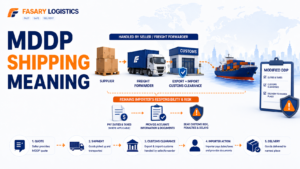
Does DDP Shipping Include Customs Cost?
DDP-style shipping may include some customs-related costs, but only if the written quote says so clearly. Some quotes may include duty and tax handling; others may exclude exam fees, storage, special compliance issues, or unexpected customs charges. For duty-paid quote scope, see DDP shipping from China to USA and hidden fees in DDP shipping from China to USA.
| Cost item | May be included in DDP? | What to confirm |
|---|---|---|
| Duty/tax | Often included if clearly stated | Duty/tax basis and exclusions |
| Broker handling | Sometimes included | Who coordinates entry support |
| Customs bond | Depends on service setup | Whether bond cost is included |
| Exam/CES charges | Often excluded or conditional | Who pays if selected |
| Storage/demurrage | Often conditional | Free time and delay responsibility |
| Final delivery after release | Usually if door scope is included | ZIP code, address type, appointment needs |
Unsure What DDP Includes?
Share your DDP quote, cargo value, product details, delivery ZIP code, and written inclusions. We’ll help check whether duty, broker handling, exams, storage, and delivery scope are clearly stated.
*Fast response. No obligation.
Why Customs Costs Can Change After Shipment
| Reason | How it affects cost | What to check before booking |
|---|---|---|
| Incomplete product description | Duty or review basis may change | Specific product details |
| HTS / classification question | Duty rate may change | Broker review and product details |
| Declared value issue | Duty and fees may be affected | Commercial invoice value |
| AD/CVD or PGA concern | Extra review or higher cost may apply | Product and agency risk |
| Customs exam | Exam, CES, or trucking fees may appear | Exam cost responsibility |
| Storage/demurrage or DDP exclusions | Delay or excluded items may be billed later | Free time and written exclusions |
These risks should be checked before booking, especially for regulated goods, high-value shipments, products with anti-dumping risk, or quotes that use vague “all included” wording.
What Information Should Importers Prepare Before Asking About Customs Cost?
A useful customs cost review needs product and import details, not only freight size. The more precise the product information, the easier it is to discuss U.S. customs cost from China before the shipment moves. For document preparation, see what is a commercial invoice and what is a packing list.
| Information needed | Why it matters |
|---|---|
| Product name / material / use | Basic identification and classification review |
| Photos or product link | Helps clarify vague descriptions |
| Declared value / country of origin | Affects duty and some fees; needed for tariff review |
| HTS code if known | Helps estimate duty basis |
| Commercial invoice and packing list | Supports entry review |
| Shipment method / importer setup / bond status | Air, ocean, express, or DDP scope; confirms entry responsibility |
| Special product concerns | Batteries, wood, food contact, medical, branded goods, AD/CVD risk |
Ready to Review Your Import Cost?
Send your product name, material, use, declared value, origin, commercial invoice, packing list, shipment method, importer setup, and any product compliance concerns.
*Fast response. No obligation.
Common Mistakes When Estimating Customs Cost from China
| Mistake | What can go wrong | Better approach |
|---|---|---|
| Thinking customs cost equals freight cost | Import charges may be missing | Separate freight and customs layers |
| Estimating duty from product name only | Duty estimate may be wrong | Use product details and HTS review |
| Ignoring MPF or HMF | Government fees may be missed | Ask broker what applies |
| Assuming DDP includes everything | Exceptions may be billed later | Check written DDP scope |
| Ignoring bond or broker fee | Entry cost may be incomplete | Confirm broker and bond setup |
| Not asking who pays exam/storage | Surprise cost may appear | Clarify exception charges |
| Forgetting PGA or compliance risk | Release and cost may be affected | Check product-specific concerns |
FAQ
What is customs cost from China to USA?
Customs cost from China to USA means the customs-related cost layer for U.S. imports. It may include import duty, MPF, HMF for ocean shipments, broker fees, bond costs, exam or inspection fees, storage, demurrage, and DDP-related inclusions or exclusions.
Is customs cost the same as shipping cost?
No. Shipping cost usually refers to transportation, such as pickup, air or sea freight, and delivery. Customs cost is connected to import entry, government fees, broker handling, duty/tax review, bond setup, exams, or release-related situations.
What customs fees apply when importing from China?
Possible customs fees from China include import duty, MPF (0.3464%), HMF (0.125% for ocean), customs broker fees, bond cost, exam or CES fees, and delay-related storage or demurrage. The actual items depend on product, value, shipment method, and quote scope.
Does DDP shipping from China include customs costs?
It may, but only if the written DDP quote says so clearly. Some DDP-style quotes include duty and tax handling, while exam fees, storage, special compliance costs, or unexpected customs charges may be excluded or conditional.
Can customs exam fees be predicted before shipping?
Not reliably. A customs exam may or may not happen, and exam-related costs depend on shipment type, port, exam facility, trucking, storage, and timing. Importers should confirm who pays if an exam or inspection occurs.
What information is needed to estimate customs cost from China?
Prepare product name, material, use, photos or product link, declared value, origin, HTS code if known, commercial invoice, packing list, shipment method, importer setup, bond status, and any special concerns such as batteries, wood, medical, food contact, branded goods, or AD/CVD risk.
Conclusion
Customs cost from China may include duty, MPF, HMF, broker fees, bond costs, exam fees, storage, and DDP-related inclusions or exclusions.
The final amount depends on product details, value, HTS code, shipment method, importer setup, and written quote scope. Importers should separate customs-related costs from freight cost before comparing quotes.
If you are unsure what your customs cost will be, send Fasary Logistics your product details, declared value, HS code if available, shipment method, and quote scope. We help review the customs-cost stack and confirm who pays what before you book. For the full freight process, see shipping from China to USA.